
A graduate degree is an academic qualification you earn after completing a bachelor's degree, usually a master's degree or a doctorate. The graduate degree meaning is straightforward: it signals advanced, specialized study beyond the undergraduate level, and it prepares you for senior professional roles, research, or leadership. In many countries, including Ghana, the terms "graduate degree" and "postgraduate degree" describe the same level of study.
For working professionals in Accra and across Ghana, the practical question is rarely what the term means. It is whether the investment fits a career and a schedule. This article explains what a graduate degree is, the main types, what comes after one, and how to judge whether you need one.
What Does a Graduate Degree Mean?
A graduate degree is an award earned at a postsecondary institution after you have already completed an undergraduate degree. The National Center for Education Statistics defines a degree as an award recognizing successful completion of a program of study at a postsecondary institution. A graduate degree is the segment of that system that sits above the bachelor's level.
Three features set graduate study apart from undergraduate study:
- Prerequisite: You normally need a bachelor's degree to be admitted, although some institutions assess work experience for applicants without one.
- Depth over breadth: Coursework concentrates on one field, such as finance, law, or theology, rather than a broad general education.
- Independent work: Expect research projects, case analysis, or a dissertation, with more self-directed study than at the undergraduate stage.
The College Board offers a useful overview of the college degree hierarchy that shows where graduate study sits relative to associate and bachelor's degrees. For a closer look at the contrast between the two stages, see this explanation of the difference between graduate and undergraduate study.
What Are the Three Types of Graduate Degrees?
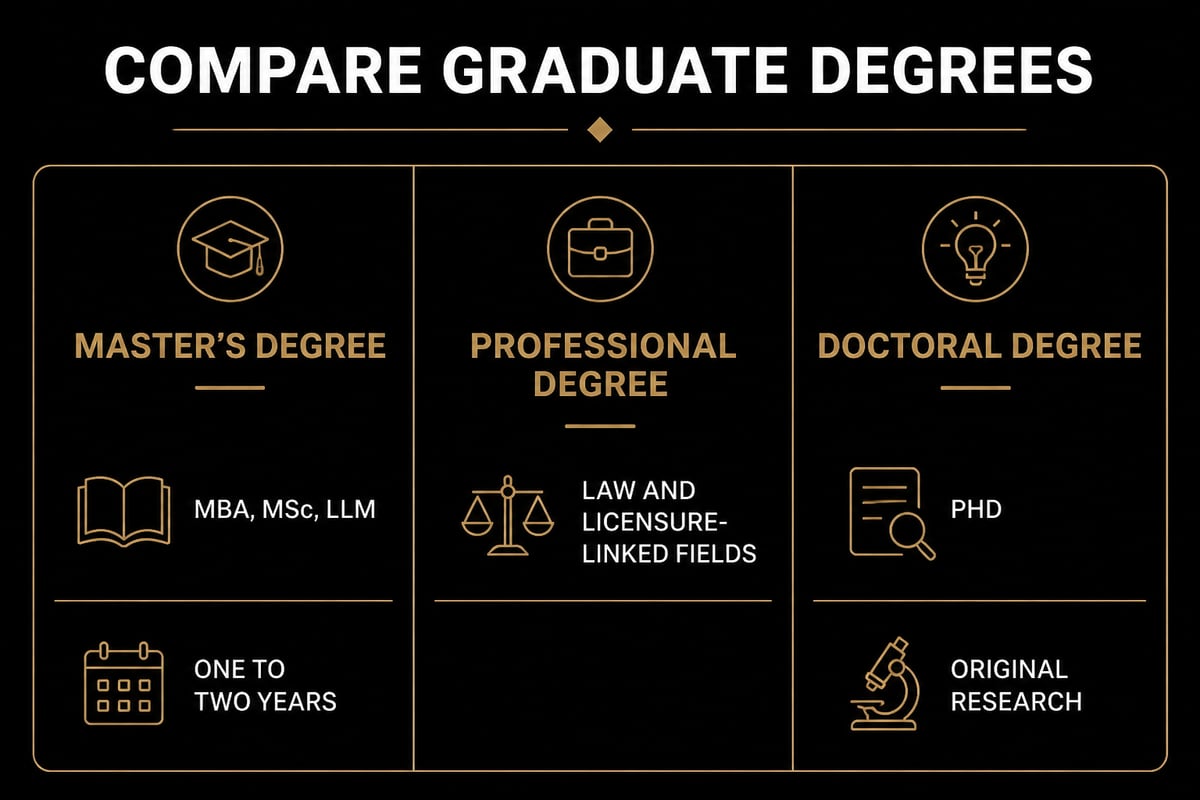
The three main types of graduate degrees are the master's degree, the professional degree, and the doctoral degree. Each serves a different purpose, and the right choice depends on whether your goal is advancement in practice, entry to a regulated profession, or original research.
| Type | Typical examples | Main purpose | Usual duration |
|---|---|---|---|
| Master's degree | MBA, MSc, LLM | Advanced expertise and career progression | One to two years |
| Professional degree | Law and other licensure-linked qualifications | Preparation for a regulated profession | Varies by field |
| Doctoral degree | PhD | Original research and academic or policy leadership | Several years |
Duration varies by institution and mode of study. NCES notes that a master's degree generally requires one or two years of full-time study beyond a bachelor's degree, with both academic and professionally oriented program types. The department of the institution you apply to will confirm exact timelines.
Master's Degrees
A master's degree is the most common graduate qualification and the one most working professionals pursue. It comes in academic forms, such as an MSc, and professional forms, such as an MBA. If you are weighing options, this guide to professional master’s degrees explains how they differ from research-oriented programs.
Professional Degrees
Professional degrees prepare graduates for fields that carry licensing or formal practice standards. Law is the clearest example. An LLM, for instance, builds specialist knowledge in areas such as international law and is often chosen by legal practitioners, policy advisers, and aspiring diplomats who want depth in a particular body of law.
Doctoral Degrees
The doctorate is the highest academic award. It centers on an original contribution to knowledge, defended through a dissertation. Our overview of the doctorate degree covers what the path involves.
What Comes After a Degree?
After a bachelor's degree, the next step is a graduate degree, and after a graduate degree you can pursue a doctorate, a professional certification, or move directly into senior roles. The path is not a fixed ladder. Many professionals stop at a master's degree because it already meets the requirements of the roles they want.
Common routes after a bachelor's degree include:
- A master's degree in the same field to deepen expertise, such as an MSc.
- A master's degree in a different field, such as an MBA for a technical graduate moving into management.
- A postgraduate certificate or diploma for a shorter, focused qualification.
- Professional certification from a recognized body, sometimes combined with a master's.
After a master's degree, the options include a doctorate, executive-level roles, or specialist advisory work. If you are comparing stages, the page on postgraduate degrees explains how the terminology lines up across systems.
Graduate Degree vs Postgraduate Degree
In most contexts the two terms mean the same thing. "Graduate degree" is the usual American phrasing, while "postgraduate degree" is standard in Ghana, the United Kingdom, and much of the Commonwealth. Both describe study undertaken after a first degree.
The confusion arises with the word "graduate" itself. In everyday speech, a graduate is anyone who has completed a degree. In admissions language, a "graduate program" is a program for people who already hold one. When you read a university prospectus in Ghana, "postgraduate" will usually be the term used, and it points to the same master's and doctoral qualifications described here.
What Is an Example of Graduate School?
Graduate school is simply the part of a university that offers master's, professional, and doctoral programs, and a business school offering an MBA is a typical example. A law faculty offering an LLM and a theology department awarding a master's or doctorate are others. Graduate school is a level of study, not a separate kind of institution, and many universities run graduate programs alongside their undergraduate ones.
A concrete example for working professionals in Ghana is a one-year MBA with a finance specialization. University of Gold Coast offers an MBA in Finance that runs for 12 months and leads to an MBA degree, a CMI Level 7 Certificate, and Chartered Manager Status. The details of entry requirements and fees are best confirmed directly with the university.
Who Needs a Graduate Degree?
You need a graduate degree if your target role, license, or field requires one, or if it would clearly widen your options at your current career stage. It is not necessary for every career, and the decision should rest on a specific goal rather than a general sense that more education is better.
A graduate degree tends to make sense in these situations:
- Moving into management: Mid-career professionals who want senior leadership roles often use an MBA to build finance, strategy, and people-management skills.
- Entering law, policy, or diplomacy: International law and policy roles value specialist qualifications, and an LLM gives structured knowledge of areas such as treaty law and dispute resolution.
- Changing fields: A master's degree in a new discipline provides a credible entry point without restarting from an undergraduate degree.
- Research or academic careers: A doctorate is typically a requirement.
It may be less necessary if your career already progresses on experience alone, or if employers in your sector hire and promote without postgraduate credentials. Speak with people in the roles you want and check actual job requirements before committing.
Does a Graduate Degree Pay Off?
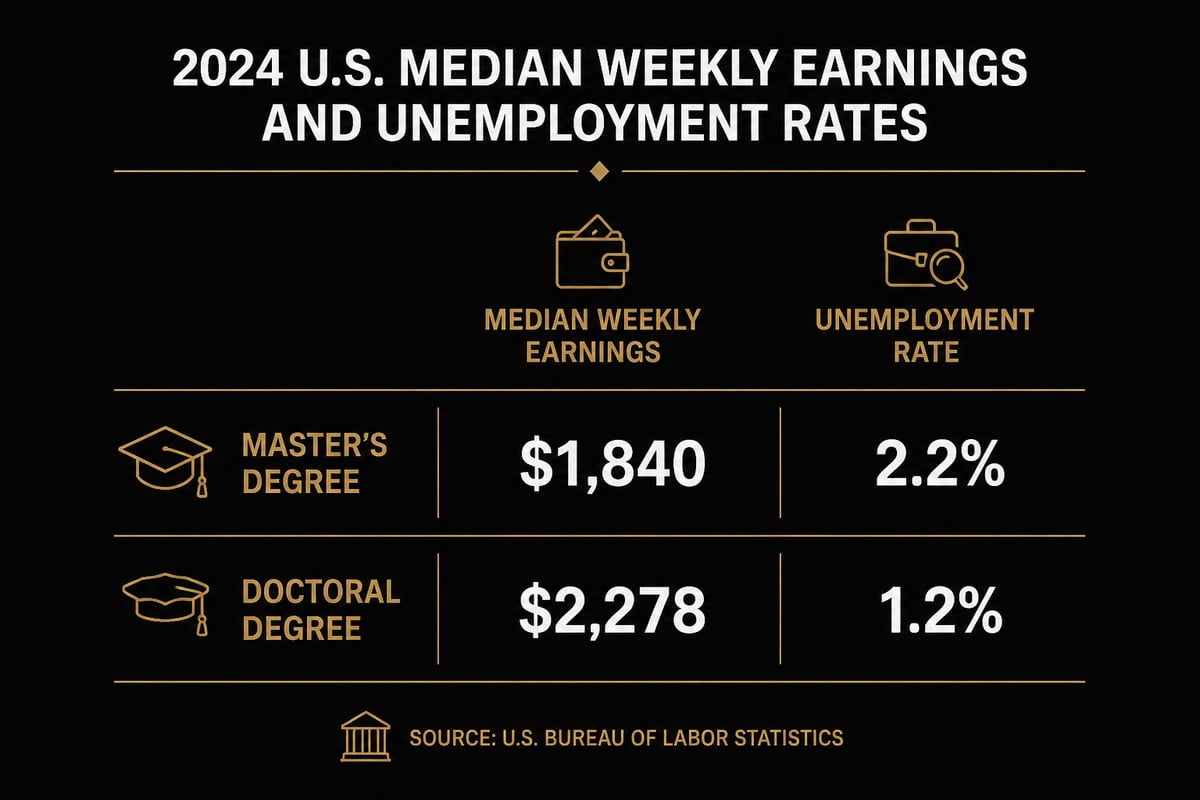
Graduate degrees are associated with higher earnings and lower unemployment, though the figures below describe the United States and should be read as indicative rather than as a forecast for Ghana. The U.S. Bureau of Labor Statistics reports that in 2024, full-time workers age 25 and over with a master's degree had median weekly earnings of $1,840 and an unemployment rate of 2.2%. For those with a doctoral degree, median weekly earnings were $2,278 and the unemployment rate was 1.2%.
Those numbers describe averages across all occupations. Your own return depends on your field, your employer, and how you apply the qualification. The Bureau also publishes a collection of earnings and wages articles.
Cost matters in the calculation. If you want to compare price points before applying, these guides to affordable graduate programs and the cheapest master's degree options outline what to weigh.
How Can You Study for a Graduate Degree While Working?
The most practical way to earn a graduate degree while employed is a program built around a working schedule, such as weekend, modular, or online delivery. Full-time, weekday study usually means stepping away from your job, which is not realistic for most managers and professionals in Accra.
When evaluating a program, check these points:
- Accreditation: Confirm that the programs are approved by the Ghana Tertiary Education Commission (GTEC) and that the institution holds a legitimate charter.
- Schedule: Look for a format that fits your working week, with predictable contact days.
- Payment structure: Instalment plans can make costs easier to manage alongside household and business commitments.
- Faculty: Instructors with current industry experience help you connect coursework to your own workplace.
- Support services: Online libraries and student portals matter when you study part-time and cannot visit campus daily.
University of Gold Coast holds the Presidential Charter granted by the Government of Ghana, and all its academic programmes are accredited by GTEC. Classes run one full weekend a month, which allows working professionals to study without leaving their jobs, and flexible payment plans let students pay as they go. Faculty bring real-world industry experience into the classroom, and the learning environment is Christ-centred, combining academic excellence with ethical leadership.

Admission Requirements for Graduate Study
Most graduate programs ask for a recognized bachelor's degree, academic transcripts, and a completed application, and some add professional references or a statement of purpose. Requirements differ by program and institution, so always confirm them with the admissions office before you apply.
Some universities also offer a bridging route for applicants whose first qualification does not directly match their intended field. The graduate access program is one example of such a pathway at University of Gold Coast, and you can review the postgraduate brochure for programme listings and entry details.
FAQ
Is a master's degree a graduate degree?
Yes. A master's degree is the most common type of graduate degree, earned after a bachelor's degree. MBA, MSc, and LLM qualifications all fall into this category.
Is a graduate degree the same as a bachelor's degree?
No. A bachelor's degree is an undergraduate qualification and is normally the entry requirement for graduate study. A graduate degree is the next level, covering master's, professional, and doctoral programs.
How long does it take to earn a graduate degree?
A master's degree generally takes one to two years of full-time study, while a doctorate takes considerably longer. Part-time and weekend formats usually extend the calendar time but allow you to keep working.
Your next step is to write down the specific role or qualification you want in the next five years and check whether employers in that field ask for a master's degree or higher. If the answer is yes, compare programs on accreditation, schedule, and payment terms. University of Gold Coast offers weekend-based postgraduate study in business, law, and theology, including the MBA in Finance, and you can take the first step toward joining a cohort when you apply now.