
Choosing between undergraduate and graduate degrees represents one of the most significant educational decisions you will make. These two tiers of higher education serve distinct purposes, require different commitments, and lead to varied career outcomes. Understanding the fundamental differences, investment requirements, and potential returns can help you chart a course that aligns with your professional aspirations and personal circumstances. Whether you're a high school graduate exploring your first degree or a working professional considering advanced credentials, this comprehensive guide examines what distinguishes these academic levels and how to navigate your options strategically.
Understanding the Fundamental Differences Between Degree Levels
Undergraduate and graduate degrees differ in scope, depth, and academic expectations. An undergraduate degree, typically a bachelor's degree, provides foundational knowledge across a broad discipline and usually requires four years of full-time study. Graduate degrees-including master's programs, doctoral degrees, and professional certifications-demand specialized expertise in a narrow field and build upon the foundation established during undergraduate work.
The pedagogical approach shifts dramatically between these levels. Undergraduate education emphasizes breadth, introducing students to multiple subjects and developing critical thinking skills across varied contexts. Graduate education prioritizes depth, requiring students to contribute original research, master advanced theories, or develop professional competencies that extend beyond basic comprehension.
Academic Prerequisites and Admission Standards
Admission requirements distinguish these degree levels clearly. Undergraduate programs generally require a high school diploma or equivalent, standardized test scores (though increasingly optional), and evidence of academic readiness. Graduate programs mandate a completed bachelor's degree, often with minimum GPA thresholds ranging from 2.5 to 3.5 depending on competitiveness, plus additional elements:
- Standardized graduate exams (GRE, GMAT, LSAT, MCAT)
- Letters of recommendation from academic or professional supervisors
- Personal statements articulating research interests or career goals
- Relevant work experience (especially for MBA and professional programs)
- Writing samples or portfolio submissions for specialized fields

The Council of Graduate Schools data reveals that graduate admissions have become increasingly selective, with many programs accepting fewer than 20 percent of applicants in competitive fields. This selectivity reflects not only academic standards but also limited cohort sizes designed to ensure adequate mentorship and resources.
Types of Undergraduate and Graduate Degrees Available
The landscape of undergraduate and graduate degrees encompasses numerous credential types, each designed for specific educational and career objectives. Bachelor's degrees remain the most common undergraduate credential, available as Bachelor of Arts (BA), Bachelor of Science (BS), or specialized professional degrees such as Bachelor of Business Administration (BBA).
Undergraduate Degree Categories
Associate degrees represent two-year programs offering either terminal credentials for specific careers or transfer pathways to bachelor's programs. These degrees cost substantially less than four-year programs and provide faster entry into fields like nursing, information technology, or business administration.
Bachelor's degrees typically require 120-128 credit hours distributed across:
- General education requirements (humanities, sciences, mathematics)
- Major coursework (focused disciplinary study)
- Elective courses (exploration or minor fields)
- Capstone projects or senior seminars
Graduate Degree Spectrum
Graduate education divides into several distinct categories. Master's degrees usually require one to two years and come in research-focused (MA, MS) or professional variants (MBA, MPA, MSW). These programs suit professionals seeking advancement, career changers developing new expertise, or researchers preparing for doctoral study.
| Degree Type | Duration | Primary Purpose | Typical Careers |
|---|---|---|---|
| Master's (MA/MS) | 1-2 years | Research or specialization | Analyst, researcher, specialist roles |
| Professional Master's | 1-3 years | Career advancement | Management, clinical practice, policy |
| Doctoral (PhD) | 4-7 years | Original research | Professor, senior researcher, expert |
| Professional Doctorate | 3-4 years | Advanced practice | Physician, lawyer, clinical psychologist |
Doctoral degrees represent the highest academic achievement. Research doctorates (PhD, EdD) emphasize original scholarship and prepare scholars for academic careers or high-level research positions. Professional doctorates (JD, MD, DBA) focus on advanced practice in specific professions rather than research methodology.
The University Of Gold Coast exemplifies this diversity by offering programs spanning PhD, MBA, MSc, and LLM degrees across business, law, and theology, addressing both research and professional development needs.
Financial Investment and Funding Pathways
The cost differential between undergraduate and graduate degrees significantly impacts decision-making. Undergraduate tuition at public institutions averaged $10,940 annually for in-state students in 2026, while private universities charged approximately $39,400. Graduate programs command premium pricing, with master's degrees ranging from $30,000 to over $120,000 total, and professional programs like MBA or JD often exceeding $150,000.
Undergraduate Financing Strategies
Federal financial aid forms the backbone of undergraduate funding. The Free Application for Federal Student Aid (FAFSA) determines eligibility for grants, work-study, and subsidized loans. Pell Grants provide up to $7,395 annually for low-income students, while subsidized federal loans cap at $5,500 annually for dependent undergraduates.
Additional undergraduate funding sources include:
- Merit scholarships from institutions or private organizations
- State grant programs tied to residency
- Employer tuition assistance (for working students)
- Military benefits (GI Bill, ROTC scholarships)
- Work-study positions providing both income and experience
Graduate Student Financial Resources
Graduate students access different funding mechanisms than undergraduates. According to Federal Student Aid, graduate students can borrow up to $20,500 annually in unsubsidized Direct Loans and additional amounts through Grad PLUS loans, though these accrue interest immediately and carry higher lifetime debt burdens.
Competitive funding opportunities distinguish graduate education:
- Teaching and research assistantships that waive tuition and provide stipends
- Fellowships like the NSF Graduate Research Fellowship Program offering $37,000 annual stipends
- Employer sponsorship for professional master's programs
- Department scholarships based on merit or research potential
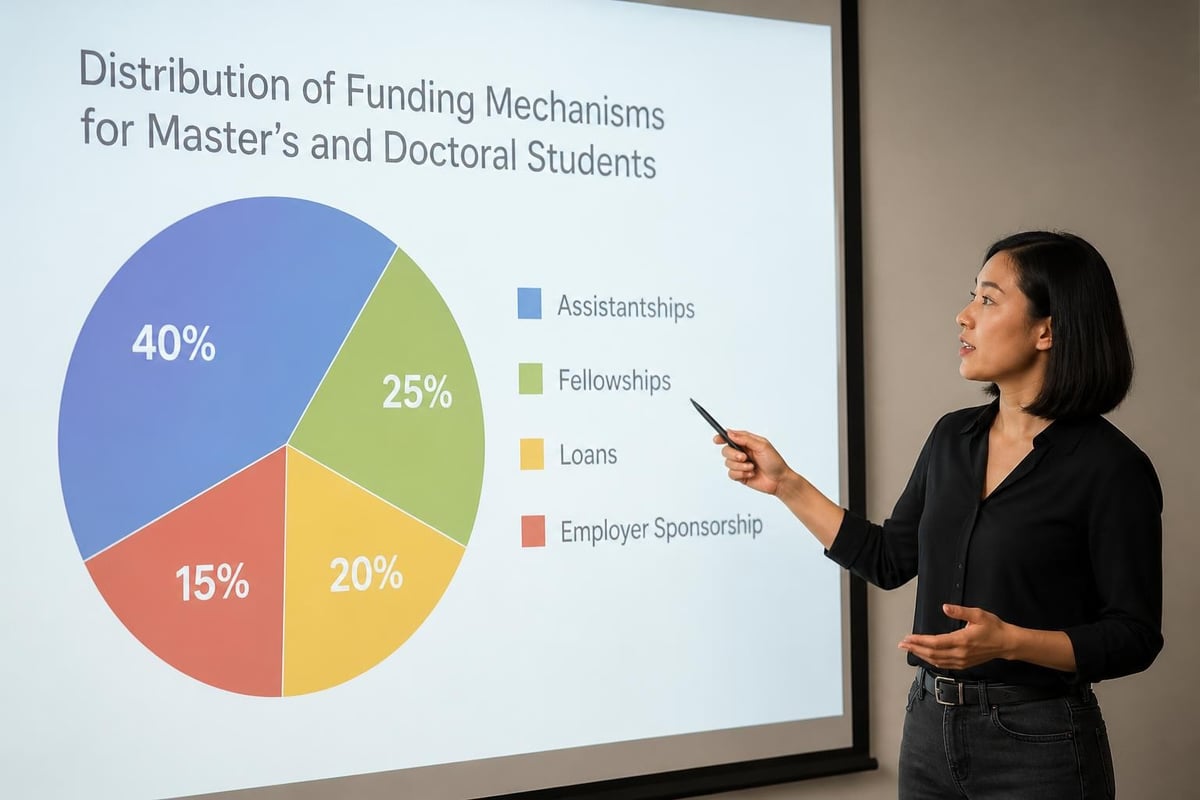
Many PhD programs in STEM fields and humanities fully fund students through assistantships, making doctoral study financially viable despite lengthy duration. Professional master's programs rarely offer full funding, positioning them as career investments rather than subsidized research training.
Career Outcomes and Earning Potential Analysis
The relationship between degree level and career outcomes remains complex, varying significantly by field, institution prestige, and individual circumstances. Pew Research Center findings indicate that 76 percent of Americans with bachelor's degrees believe their education was worth the cost, compared to 62 percent of those with graduate degrees-a nuanced reflection of debt burden versus incremental salary gains.
Undergraduate Degree Employment Patterns
Bachelor's degree holders earn median annual incomes of $69,368 in 2026, approximately 67 percent more than high school graduates. Unemployment rates remain consistently lower, hovering around 2.2 percent compared to 4.0 percent for those with only high school credentials. Certain undergraduate majors demonstrate particularly strong returns:
- Engineering disciplines ($75,000-$95,000 starting salaries)
- Computer science and information technology ($72,000-$88,000)
- Business administration ($58,000-$68,000)
- Healthcare professions ($55,000-$80,000)
Liberal arts majors, while earning less initially ($45,000-$55,000), often develop transferable skills valued in diverse industries and show income convergence with professional majors by mid-career.
Graduate Degree Premium Assessment
Graduate credentials amplify earning potential in specific contexts. Master's degree holders earn median salaries of $81,848, representing a 15-20 percent premium over bachelor's alone. However, this advantage concentrates in particular fields:
| Field | Bachelor's Median | Master's Median | Premium % |
|---|---|---|---|
| Business/Management | $68,000 | $95,000 | 40% |
| Engineering | $82,000 | $105,000 | 28% |
| Education | $48,000 | $58,000 | 21% |
| Social Sciences | $52,000 | $65,000 | 25% |
Professional doctorates command substantial premiums, with physicians earning median incomes exceeding $220,000 and lawyers averaging $135,000, though these figures obscure significant variation by specialty and geography. Research doctorates lead to more modest earnings in academic positions ($75,000-$95,000) but enable careers in cutting-edge research impossible with lower credentials.
The World Bank’s analysis of tertiary education emphasizes that employability outcomes depend not only on credential level but also on skills alignment with labor market demands, internship experiences, and regional economic conditions.
Delivery Modalities and Learning Environments
The distinction between undergraduate and graduate degrees extends to how education is delivered. Traditional residential programs remain common for undergraduates, fostering peer connections and campus engagement. Graduate students increasingly access flexible formats accommodating working professionals and geographically dispersed populations.
Undergraduate Learning Models
Campus-based undergraduate programs emphasize holistic development through residential communities, extracurricular activities, and broad social interaction. Students typically attend classes meeting two to three times weekly, participate in discussion sections, and complete assignments balancing multiple concurrent courses.
Hybrid and online undergraduate programs have expanded significantly since 2020. Research published in Humanities and Social Sciences Communications indicates that student achievement in online formats varies by discipline and learner characteristics, with structured programs incorporating synchronous interaction producing outcomes comparable to in-person instruction.
Graduate Program Flexibility
Graduate education demonstrates greater format diversity:
- Full-time residential programs (common for research master's and PhDs)
- Executive or weekend formats (professional master's degrees)
- Fully online asynchronous delivery (many EdD, MBA, and certificate programs)
- Low-residency models combining online coursework with intensive on-campus sessions
Professional graduate programs often schedule classes evenings or weekends, recognizing that students maintain employment while studying. This flexibility enables career continuity and immediate application of learning to workplace challenges, though it demands exceptional time management and creates extended program timelines.

The resources available through platforms like University Of Gold Coast’s student portal demonstrate how institutions support diverse learner populations through digital libraries, academic advising, and collaborative tools that transcend physical boundaries.
Strategic Pathways for Sequencing Your Education
Deciding when and whether to pursue graduate credentials after completing undergraduate degrees requires careful consideration of career goals, financial circumstances, and personal readiness. No single pathway suits all individuals, and the optimal sequence often depends on field-specific norms and individual circumstances.
Direct Progression Versus Work Experience
Traditional sequential progression-entering graduate school immediately after completing a bachelor's degree-suits research-focused careers and fields where continuous academic engagement builds momentum. PhD programs in sciences and humanities typically enroll students directly from undergraduate studies, providing structured mentorship and socialization into academic careers.
Professional graduate programs increasingly favor applicants with work experience:
- MBA programs prefer 3-7 years of management exposure
- Master of Social Work (MSW) programs value direct service experience
- Master of Public Administration (MPA) degrees build on policy or nonprofit backgrounds
- Healthcare administration programs recruit from clinical or operational roles
Work experience before graduate study offers several advantages: clearer career direction, stronger application materials, professional networks, and potential employer sponsorship. However, delaying graduate education creates opportunity costs and may require refreshing academic skills.
Alternative Credentials and Stackable Pathways
The binary choice between undergraduate and graduate degrees increasingly gives way to stackable credential models. Graduate certificates allow professionals to develop specialized competencies (12-18 credits) that may later apply toward full master's degrees. Professional diplomas bridge undergraduate education and graduate study, particularly in fields like business, law, and theology where University Of Gold Coast programs provide flexible advancement options.
Dual-degree programs-such as JD/MBA or MD/PhD combinations-enable students to complete two graduate credentials in less time than sequential pursuit, though they demand intensive commitment and clear career rationales justifying the investment.
Institutional Selection Criteria and Accreditation
Choosing where to pursue undergraduate and graduate degrees requires evaluating institutional characteristics beyond rankings. Regional accreditation ensures minimum quality standards and federal financial aid eligibility, while specialized programmatic accreditation (AACSB for business, ABA for law, ABET for engineering) signals field-specific excellence and may affect licensure eligibility.
Factors Differentiating Quality Programs
Research universities offer extensive resources-specialized faculty, advanced laboratories, comprehensive libraries-that particularly benefit graduate students conducting original research. Teaching-focused institutions excel at undergraduate education through smaller classes, faculty accessibility, and pedagogical innovation tailored to developing learners.
Program-specific evaluation criteria include:
- Faculty expertise and accessibility in your specialization area
- Funding availability (especially critical for graduate students)
- Career placement rates and alumni networks demonstrating employment outcomes
- Facilities and resources supporting your field (labs, libraries, clinical sites)
- Cohort size and student-faculty ratios affecting mentorship quality
For graduate programs, investigate faculty research interests closely. Doctoral success depends heavily on advisor-student fit, making faculty expertise in your precise research area essential. Professional master's programs merit evaluation based on industry connections, internship pipelines, and employer recognition within your target sector.
Global Perspectives on Degree Value
Higher education systems vary internationally in structure and credential recognition. European master's programs often require one year versus two in the United States, while British undergraduate degrees typically span three years. Understanding these differences matters when considering international programs or seeking employment across borders.
Credential evaluation services become necessary when foreign degrees require validation for U.S. employment or further study. Conversely, American undergraduate and graduate degrees generally receive recognition worldwide, though specific professional licensure (medicine, law, engineering) demands country-specific qualification processes.
Balancing Personal and Professional Development
Beyond career preparation, undergraduate and graduate degrees serve broader developmental purposes. Undergraduate education coincides with significant personal maturation, identity formation, and social development. The residential college experience, extracurricular leadership, and peer relationships contribute to outcomes extending beyond disciplinary knowledge.
Graduate education offers different developmental opportunities. Intensive specialization builds expertise and professional identity within a discipline or field. Research training develops critical thinking, problem-solving, and intellectual independence applicable across contexts. Professional programs cultivate leadership competencies, ethical reasoning, and collaborative skills essential in complex organizational environments.
Work-life balance challenges intensify in graduate programs, particularly for students managing employment, family responsibilities, and intensive coursework simultaneously. Successful graduate students develop strong time management systems, establish clear boundaries, and build support networks recognizing the temporary intensity of advanced study.
Mental health considerations deserve attention throughout higher education but require particular vigilance in graduate programs where isolation, imposter syndrome, and performance pressure can erode wellbeing. Institutional resources-counseling services, peer support groups, faculty mentorship-provide essential support infrastructure, though students must proactively access available assistance.
Return on Investment Calculation Framework
Assessing whether pursuing additional credentials makes financial sense requires systematic analysis rather than assumptions. Calculate the total cost of ownership including tuition, fees, forgone earnings, interest on loans, and opportunity costs against realistic salary premiums and career advancement possibilities.
Building Your Personal ROI Model
Start with concrete data points:
- Current salary and projected five-year trajectory without additional credentials
- Total program cost including all expenses and forgone income
- Realistic post-degree salary based on field-specific data and geographic location
- Timeline to salary recovery (breaking even on investment)
- Career opportunities accessible only with advanced credentials
For many master's programs requiring two years and $60,000 in costs plus $100,000 in forgone earnings, the investment totals $160,000. If the degree generates a $20,000 annual salary premium, simple payback requires eight years. However, this calculation ignores salary growth acceleration, non-monetary benefits, and career options impossible without the credential.
Discount future earnings to present value when comparing options across different timeframes. A dollar earned five years from now holds less value than a dollar today, and sophisticated ROI analysis accounts for this time value of money.
Choosing between undergraduate and graduate degrees shapes your career trajectory, earning potential, and professional identity for decades. Understanding the fundamental differences in purpose, cost, and outcomes enables strategic educational planning aligned with your unique goals and circumstances. Whether you're pursuing foundational knowledge through a bachelor's degree or specialized expertise through advanced credentials, the University Of Gold Coast offers comprehensive programs across PhD, MBA, MSc, LLM, and professional diplomas in business, law, and theology, supported by extensive academic resources and student development services designed to help you achieve your educational and professional aspirations.