
Australia has emerged as a premier destination for postgraduate education, attracting thousands of international students seeking advanced qualifications in science, technology, business, and research-intensive fields. The country's world-class universities, cutting-edge research facilities, and post-study work opportunities create an attractive package for ambitious professionals and recent graduates. An MSc in Australia offers not only academic excellence but also practical experience, industry connections, and potential pathways to skilled migration for those considering long-term career prospects in the region.
Understanding the Australian MSc Landscape
Australian universities structure their Master of Science programs differently from institutions in North America and Europe. Most programs run between 1.5 and 2 years full-time, though accelerated one-year options exist for students with strong undergraduate backgrounds in the same discipline.
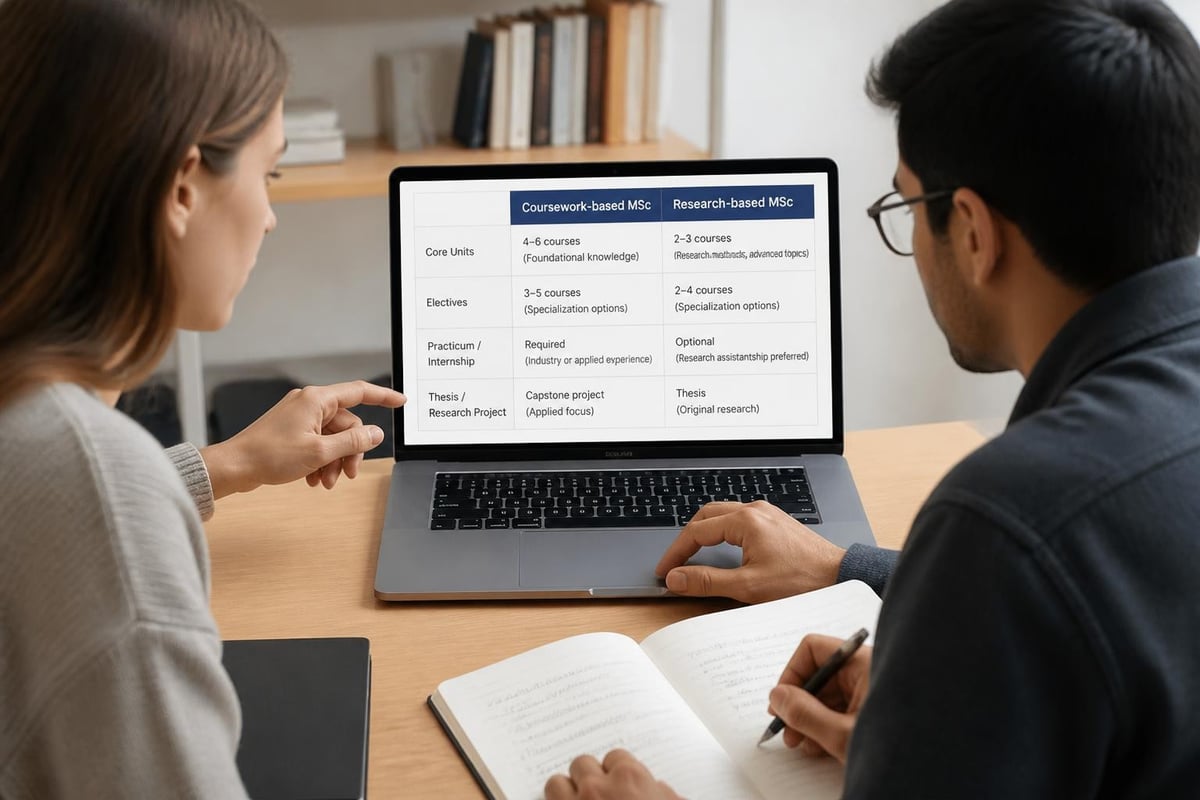
The MSc in Australia typically follows one of two pathways: coursework-based or research-based. Coursework programs emphasize structured learning through lectures, seminars, laboratory work, and industry projects. Research programs focus on independent investigation, culminating in a thesis that contributes original knowledge to the field.
Program Structure and Specializations
Australian institutions offer MSc specializations across numerous domains:
- Data Science and Artificial Intelligence: Machine learning, big data analytics, computational statistics
- Environmental Science: Climate change studies, conservation biology, sustainable resource management
- Biotechnology and Life Sciences: Genomics, pharmaceutical development, medical research
- Engineering Disciplines: Civil, mechanical, electrical, chemical, and aerospace engineering
- Information Technology: Cybersecurity, software engineering, network architecture
- Mathematics and Physics: Applied mathematics, quantum physics, computational science
Each specialization aligns with Australia's economic priorities and research strengths, ensuring graduates develop skills relevant to both local and global job markets.
Admission Requirements and Application Process
Entry standards for an MSc in Australia maintain rigor while remaining accessible to qualified international candidates. Universities assess applications holistically, considering academic records, relevant experience, and potential for success in advanced study.
Academic Prerequisites
| Requirement | Standard Expectation | Notes |
|---|---|---|
| Bachelor's degree | Minimum 3-year degree in related field | Four-year honors degrees may reduce MSc duration |
| GPA/marks | Typically 65-75% or equivalent | Top universities may require 75-80% |
| Prerequisite subjects | Depends on specialization | STEM fields often require specific undergraduate units |
| English proficiency | IELTS 6.5-7.0 or equivalent | TOEFL, PTE also accepted |
Most universities require applicants to hold a bachelor's degree in a closely related discipline. For example, admission to an MSc in Computer Science generally requires an undergraduate degree in computing, software engineering, or information systems. Some programs accept students from adjacent fields but may require bridging courses.
Application Timeline and Documentation
The application process for an MSc in Australia typically opens 6-12 months before the intended start date. Australian universities offer multiple intake periods throughout the year, with February/March and July/August being the most common.
Essential documents include:
- Certified academic transcripts from all post-secondary institutions
- Degree certificates or proof of completion
- English language test scores (unless exempt)
- Statement of purpose explaining research interests and career goals
- Letters of recommendation from academic or professional referees
- CV highlighting relevant experience and achievements
- Portfolio or publications (for research-intensive programs)
International students must verify that their chosen program appears on CRICOS, the official register confirming which courses Australian institutions can offer to overseas students.
Financial Considerations and Funding
Understanding the complete cost structure helps prospective students budget effectively and identify funding sources. An MSc in Australia represents a significant investment, but various scholarships and financial aid options can reduce the burden.
Tuition and Living Expenses
Annual tuition for international MSc students ranges from AUD 30,000 to AUD 50,000 depending on the institution and field of study. Laboratory-intensive programs and specialized engineering courses typically command higher fees than theoretical or humanities-based programs.
Beyond tuition, students must account for living costs. According to official Australian Government guidance on living costs, international students should budget approximately AUD 21,000 per year for accommodation, food, transportation, and personal expenses. Major cities like Sydney and Melbourne cost more than regional centers.
Sample Annual Budget Breakdown:
- Tuition fees: AUD 35,000 – 45,000
- Accommodation: AUD 10,000 – 18,000
- Food and groceries: AUD 4,000 – 6,000
- Transportation: AUD 1,500 – 2,500
- Health insurance (OSHC): AUD 500 – 700
- Books and supplies: AUD 1,000 – 1,500
- Personal expenses: AUD 2,000 – 3,000
Scholarship Opportunities
Multiple scholarship programs support international students pursuing an MSc in Australia. Government-funded initiatives like Australia Awards and Endeavour Scholarships cover tuition, living allowances, and travel costs for eligible candidates from partner countries.
University-specific scholarships offer partial or full tuition waivers based on academic merit, research potential, or field of study. Many institutions automatically consider all applicants for scholarships, while others require separate applications.

Student Visa Requirements and Regulations
International students need a Student visa (subclass 500) to pursue an MSc in Australia. The visa application process requires proof of enrollment, financial capacity, health insurance, and genuine temporary entrant status.
Visa Application Process
Applicants must demonstrate access to sufficient funds covering tuition and living expenses for the program duration. The Department of Home Affairs requires evidence of AUD 24,505 per year for living costs, plus tuition fees and travel expenses.
Key visa conditions include:
- Maintain enrollment and satisfactory academic progress
- Hold Overseas Student Health Cover (OSHC) for the visa duration
- Inform the institution of residential address changes within seven days
- Comply with work limitation rules (40 hours per fortnight during term)
Processing times vary from several weeks to several months depending on the applicant's country of origin and individual circumstances. Students should apply as soon as they receive their Confirmation of Enrollment (CoE) from their institution.
Work Rights and Restrictions
Student visa holders can work up to 40 hours per fortnight during academic sessions and unlimited hours during scheduled breaks. This work authorization helps offset living expenses while providing valuable Australian work experience.
Many MSc students find part-time positions in their field of study, securing research assistant roles, tutoring positions, or industry internships. These opportunities build professional networks and enhance employability after graduation.
Academic Experience and Research Opportunities
The quality of education stands as a primary attraction for students considering an MSc in Australia. Australian universities consistently rank among the world's top institutions for research output, citation impact, and graduate employability.
Teaching Methods and Assessment
Coursework programs blend traditional lectures with interactive workshops, laboratory sessions, and industry projects. Many programs incorporate Work Integrated Learning (WIL) components, placing students in professional settings to apply theoretical knowledge to real-world challenges.
Assessment methods vary by discipline but typically include:
- Written examinations and quizzes
- Research essays and literature reviews
- Laboratory reports and experimental design
- Group projects and presentations
- Case study analyses
- Professional portfolios
- Capstone projects or minor thesis
Research-based MSc programs emphasize independent investigation under expert supervision. Students develop research proposals, conduct experiments or field work, analyze data, and defend their findings before an examination committee.
Industry Partnerships and Facilities
Australian universities maintain strong connections with industry partners, government agencies, and research institutions. These collaborations provide MSc students access to cutting-edge equipment, real-world datasets, and professional mentorship.
The University Of Gold Coast exemplifies institutions committed to supporting postgraduate research through comprehensive academic resources, online libraries, and student development services that enhance the learning experience.
Career Outcomes and Post-Study Work Options
Graduates with an MSc in Australia enjoy strong employment prospects both within Australia and internationally. The qualification signals advanced expertise, research capability, and the adaptability to thrive in multicultural professional environments.
Employment Statistics and Salary Expectations
| Field | Average Starting Salary (AUD) | Employment Rate |
|---|---|---|
| Data Science/IT | 75,000 – 95,000 | 88% |
| Engineering | 70,000 – 85,000 | 85% |
| Environmental Science | 60,000 – 75,000 | 79% |
| Biotechnology | 65,000 – 80,000 | 82% |
| Finance/Business Analytics | 70,000 – 90,000 | 86% |
These figures reflect the value employers place on advanced qualifications, particularly when candidates combine theoretical knowledge with practical experience gained through internships or research projects.
Temporary Graduate Visa Pathway
One significant advantage of completing an MSc in Australia is eligibility for the Temporary Graduate visa (subclass 485), which allows graduates to work in Australia after completing their studies. The Department of Home Affairs provides comprehensive guidance on this post-study work stream.
Graduates from metropolitan institutions typically receive two years of work rights, while those who studied in regional areas may qualify for three years. This extended period allows graduates to gain professional experience, build networks, and potentially transition to employer-sponsored or skilled migration visas.
For graduates in specific fields like Information and Communication Technology, professional skills assessment through bodies like the ACS can facilitate skilled migration pathways for those interested in permanent residency.

Choosing the Right University and Location
Australia's geographic diversity offers distinct lifestyle experiences and academic environments. From coastal cities to inland research hubs, each location presents unique advantages for MSc students.
University Selection Criteria
Students should evaluate institutions based on multiple factors beyond rankings:
- Research strength in specific specialization areas
- Faculty expertise and publication records
- Industry partnerships and internship opportunities
- Laboratory facilities and technological infrastructure
- Graduate outcomes and employment statistics
- Scholarship availability and financial support
- Campus culture and international student services
The Study in Australia provider search allows prospective students to compare institutions, verify CRICOS registration, and explore program details across all Australian states and territories.
Regional Versus Metropolitan Study
Metropolitan universities in Sydney, Melbourne, and Brisbane offer extensive industry networks, cultural diversity, and abundant part-time employment. However, living costs run higher and competition for opportunities intensifies.
Regional universities provide more affordable living, smaller class sizes, and closer faculty relationships. Many offer identical academic quality while providing additional visa benefits, including extra post-study work time and potential migration advantages.
Application Strategy and Timeline
Successful applicants typically begin planning 12-18 months before their intended start date. This timeline accommodates research, applications, visa processing, and logistical arrangements.
Twelve-Month Action Plan
Months 12-10 before intake:
- Research programs and universities
- Identify scholarship opportunities
- Prepare for English language tests if required
- Request academic transcripts and references
Months 9-7:
- Submit applications to selected institutions
- Apply for scholarships with separate applications
- Take English proficiency tests
- Prepare financial documentation
Months 6-4:
- Receive offer letters and accept preferred program
- Apply for student visa
- Arrange Overseas Student Health Cover
- Secure accommodation
Months 3-1:
- Complete pre-departure preparations
- Attend orientation sessions
- Finalize travel arrangements
- Connect with current students or alumni
This structured approach reduces stress and ensures all requirements receive adequate attention.
Living in Australia as an International Student
Cultural adaptation, social integration, and personal wellbeing significantly impact academic success. Australia's multicultural society welcomes international students, but adjusting to new academic expectations and social norms requires intentional effort.
Campus Life and Support Services
Australian universities provide comprehensive support for international students including academic skills workshops, counseling services, career guidance, and social activities. Student associations organize events celebrating diverse cultures and creating opportunities for cross-cultural friendship.
Most institutions employ dedicated international student advisors who assist with visa questions, accommodation issues, and adjustment challenges. Peer mentoring programs connect new arrivals with experienced students who understand the transition process.
Health and Wellbeing
All international students must maintain Overseas Student Health Cover (OSHC) throughout their visa period. This insurance covers medical appointments, hospital treatment, prescription medications, and emergency ambulance services.
Universities offer on-campus health clinics, mental health support, and wellness programs addressing the unique stresses of postgraduate study. Accessing these resources early prevents small concerns from escalating into significant problems.
Maximizing Your MSc Experience
Success in an MSc in Australia extends beyond achieving high grades. Strategic choices during the program can accelerate career advancement and personal development.
Building Professional Networks
Attending conferences, joining professional associations, and participating in industry events creates connections that outlast the degree. Many MSc graduates attribute job offers and research collaborations to relationships formed during their studies.
Professional organizations often offer student memberships at reduced rates, providing access to publications, webinars, and networking forums. These memberships signal professional commitment to potential employers.
Research Publication and Presentation
Students in research-based programs should aim to publish findings in peer-reviewed journals or present at conferences. These achievements distinguish candidates in competitive job markets and demonstrate research capability to doctoral program admissions committees.
Many supervisors encourage co-authorship on papers, helping students navigate the publication process while building their academic portfolio.
Skill Development Beyond the Curriculum
Complementing technical expertise with transferable skills enhances employability. Consider developing competencies in:
- Project management and team leadership
- Technical writing and scientific communication
- Data visualization and presentation design
- Programming languages relevant to your field
- Cross-cultural collaboration and communication
Universities offer workshops, short courses, and certificates in these areas, often at no additional cost to enrolled students.
Pursuing an MSc in Australia represents a transformative investment in your professional future, combining world-class education with international experience and career opportunities. The journey requires careful planning, financial preparation, and strategic decision-making to maximize returns on your time and resources. Whether you're seeking to deepen expertise in your current field, pivot to a new specialization, or position yourself for doctoral research, Australian MSc programs deliver rigorous training supported by outstanding faculty and facilities. University Of Gold Coast stands ready to guide ambitious students through their postgraduate journey, offering comprehensive academic programs and student support services designed to foster both scholarly achievement and professional growth.