
Graduate education represents a significant investment in your professional future, but the escalating costs have many prospective students questioning whether advanced degrees remain financially accessible. The landscape of affordable graduate programs has evolved considerably, with institutions adopting innovative pricing models, expanded financial aid options, and flexible delivery formats that reduce total costs. Understanding how to identify and leverage these opportunities can transform a seemingly unattainable goal into an achievable pathway for career advancement without crippling debt.
Understanding the True Cost of Graduate Education
The sticker price of a graduate program rarely tells the complete financial story. When evaluating affordable graduate programs, prospective students must consider multiple cost components beyond tuition alone.
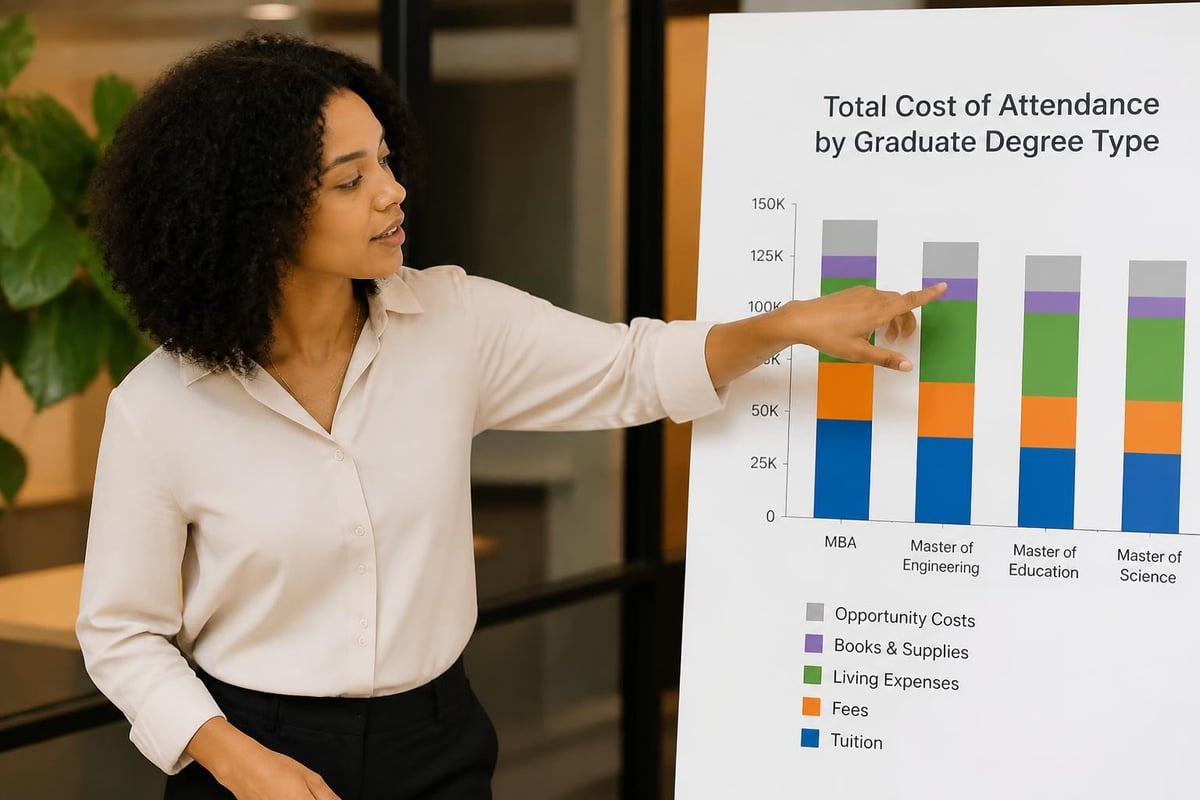
Total cost of attendance includes tuition, fees, books, supplies, housing, meals, transportation, and personal expenses. Many students focus exclusively on tuition rates while overlooking these additional expenses that can add $15,000 to $30,000 annually to the true cost.
Breaking Down Graduate Program Expenses
Different degree types carry vastly different price tags. According to Georgetown University’s Center on Education and the Workforce, the median total cost for master's degrees varies from $30,000 for education programs to over $120,000 for business degrees at private institutions.
| Degree Type | Median Total Cost | Typical Duration | Annual Cost Range |
|---|---|---|---|
| Master's in Education | $30,000-$50,000 | 1-2 years | $15,000-$25,000 |
| MBA | $60,000-$120,000 | 2 years | $30,000-$60,000 |
| Master's in Engineering | $40,000-$80,000 | 1.5-2 years | $25,000-$40,000 |
| LLM | $50,000-$70,000 | 1 year | $50,000-$70,000 |
| PhD Programs | Often fully funded | 4-6 years | $0-$30,000 |
The College Scorecard data provides detailed cost and outcome information that allows prospective students to compare specific programs and calculate potential return on investment before committing.
Strategies for Finding Affordable Graduate Programs
Identifying truly affordable graduate programs requires research beyond basic tuition comparisons. Several key factors distinguish genuinely cost-effective options from programs with hidden expenses.
Public vs. Private Institution Considerations
State universities typically offer the most affordable graduate programs for in-state residents, with tuition rates 40-60% lower than comparable private institutions. However, private universities sometimes provide superior financial aid packages that can offset higher sticker prices.
Out-of-state students should investigate regional exchange programs and reciprocity agreements that allow reduced tuition at public universities across state lines. These arrangements can make affordable graduate programs accessible to students who would otherwise face non-resident surcharges.
Online and Hybrid Program Formats
Online graduate programs eliminate housing, transportation, and relocation costs while maintaining academic quality. Many reputable institutions now offer fully accredited online degrees with identical credentials to on-campus programs at 20-40% lower total costs.
- Asynchronous formats allow students to maintain full-time employment while studying
- Reduced fees since students don't access physical campus facilities
- Geographic flexibility eliminates relocation expenses
- Accelerated timelines compress degree completion, reducing overall costs
The University of Gold Coast exemplifies this approach by offering comprehensive graduate programs across business, law, and theology with flexible delivery options that accommodate working professionals.
Financial Aid and Funding Sources for Graduate Students
Unlike undergraduate education, graduate students have access to distinct funding mechanisms that can dramatically reduce out-of-pocket costs. Understanding and pursuing multiple funding streams simultaneously maximizes the potential for securing affordable graduate programs.
Federal Student Aid for Graduate Education
Graduate students remain eligible for federal Direct Unsubsidized Loans up to $20,500 annually and Grad PLUS loans covering the full cost of attendance. While these represent borrowing rather than free aid, federal loans offer income-driven repayment options and potential forgiveness programs unavailable through private lenders.
The FAFSA simplification changes for 2024-25 have streamlined the application process and expanded eligibility for certain graduate students, making it essential to complete the FAFSA even when you believe you won't qualify for need-based aid.
Assistantships, Fellowships, and Grants
Teaching assistantships and research assistantships represent the gold standard for making graduate programs affordable. These positions typically provide:
- Full or partial tuition waivers
- Monthly stipends ranging from $15,000 to $35,000 annually
- Valuable professional experience in your field
- Health insurance coverage at some institutions
Competitive fellowships from professional associations, foundations, and government agencies offer another pathway to affordable graduate programs. Fields like STEM, education, and public service have particularly robust fellowship opportunities.

Employer-Sponsored Graduate Education
One of the most overlooked pathways to affordable graduate programs involves employer tuition assistance and reimbursement programs. According to SHRM’s 2024 Talent Trends research, approximately 48% of employers now offer some form of educational assistance as an employee benefit.
Maximizing Employer Education Benefits
Tuition reimbursement programs typically cover $5,250 annually-the IRS tax-free limit-though some employers exceed this amount. Strategic employees can structure their graduate studies to align with these annual limits, spreading costs across multiple calendar years.
- Review your employee handbook for existing education benefits
- Negotiate education assistance during job offers or performance reviews
- Propose how your degree will benefit the organization
- Maintain required grades and job tenure to keep benefits
Some forward-thinking organizations partner directly with universities to offer discounted tuition rates for employees, creating pathways to affordable graduate programs while building employee loyalty and skills.
Return on Investment Considerations
The affordability of graduate programs must be evaluated against potential earnings increases and career advancement opportunities. Brookings Institution research demonstrates that returns vary dramatically by field, with some degrees offering substantial salary premiums while others show minimal financial benefits.
Calculating Your Graduate Degree ROI
| Factor | Evaluation Method | Weight in Decision |
|---|---|---|
| Total program cost | Direct costs + opportunity costs | High |
| Expected salary increase | Industry data for degree holders vs. non-holders | High |
| Years to break even | Total cost / annual salary increase | Medium |
| Career advancement probability | Promotion rates, job access | Medium |
| Non-financial benefits | Job satisfaction, flexibility, prestige | Variable |
MBA programs typically show positive ROI within 3-5 years for full-time programs at reputable institutions, while part-time and online formats may break even faster due to lower opportunity costs. Master's degrees in education often require 10-15 years to recoup costs through salary increases, making affordability particularly crucial in this field.
Professional master's degrees in high-demand fields like computer science, data analytics, and healthcare administration demonstrate strong ROI regardless of program cost, while humanities master's degrees require careful financial planning to ensure affordability.
Alternative Credentials and Stackable Programs
The emergence of alternative credentials presents new opportunities for affordable graduate programs through modular, stackable approaches to advanced education.
Graduate Certificates and Micro-credentials
Graduate certificates typically require 12-18 credits and cost $5,000-$15,000, providing specialized knowledge without full degree commitment. Many institutions allow certificates to stack toward master's degrees, creating flexible, affordable pathways where students can:
- Complete a certificate while testing the field and institution
- Apply for employer reimbursement for shorter, lower-cost commitments
- Pause education if needed without abandoning progress
- Transfer credits toward a full degree if career goals expand
This modular approach to affordable graduate programs reduces financial risk while maintaining professional momentum. As The Hechinger Report analyzes, policymakers increasingly recognize the value of these shorter credentials in workforce development.

Military and Veteran Education Benefits
Service members and veterans have access to powerful funding mechanisms that make affordable graduate programs highly accessible through strategic benefit utilization.
GI Bill Graduate Education Coverage
The Post-9/11 GI Bill covers full in-state tuition and fees at public universities or up to $26,381.37 annually (2026 rate) at private institutions and foreign schools. The Yellow Ribbon Program allows participating schools to cover costs exceeding these caps without charge to veterans.
Veterans pursuing graduate education should:
- Compare Yellow Ribbon participation rates across target schools
- Consider in-state public options for maximum benefit coverage
- Utilize vocational rehabilitation benefits if service-connected disabilities apply
- Explore concurrent use of employer tuition assistance to stretch benefits
Active duty service members can use Tuition Assistance covering up to $4,500 annually while serving, then transition to GI Bill benefits after separation for continuous education funding.
Program-Specific Affordability Factors
Different graduate degree types offer unique opportunities and challenges for students seeking affordable options.
MBA Programs: Balancing Cost and Reputation
Full-time MBA programs at top-tier schools cost $100,000-$200,000 but often provide superior career placement, networking, and salary increases. Part-time and Executive MBA formats allow students to continue earning while studying, dramatically improving affordability despite similar tuition rates.
Regional business schools frequently offer affordable graduate programs with strong local employer relationships and significantly lower costs than nationally ranked programs. For students planning to work regionally rather than pursuing international careers, these programs deliver excellent ROI.
Law Programs and the LLM Decision
The Master of Laws (LLM) serves different purposes for international lawyers seeking U.S. credentials versus American JD holders pursuing tax, intellectual property, or other specializations. Affordable LLM programs exist at regional law schools and through one-year intensive formats that minimize opportunity costs.
International students should compare LLM costs against potential U.S. career opportunities and visa considerations, while domestic students should ensure the specialized degree commands a salary premium in their target legal market.
Research Doctoral Programs
PhD programs in most fields offer funded positions including tuition waivers and stipends, making them the most affordable graduate programs for students committed to research careers. However, opportunity costs remain significant due to 4-6 year timelines.
Prospective doctoral students should only consider programs offering full funding packages and should compare stipend amounts against local cost of living to ensure genuine affordability.
Debt Management and Repayment Strategies
Even with careful planning, most students pursuing affordable graduate programs will need to borrow some amount. Strategic borrowing and repayment planning protect long-term financial health.
Smart Borrowing Principles
- Exhaust federal options before considering private loans
- Borrow only what you need for educational and essential living expenses
- Consider part-time enrollment to work while studying and reduce borrowing
- Track total debt across all education levels to avoid excessive burden
Income-driven repayment plans cap federal loan payments at 10-15% of discretionary income, providing safety nets for graduates whose salaries don't meet initial expectations. Public Service Loan Forgiveness offers complete forgiveness after 10 years for qualifying employment in government and nonprofit sectors.
Negotiating Financial Aid Packages
Graduate admission offers aren't always final, and prospective students with strong credentials can often negotiate improved funding to make programs more affordable.
Effective Negotiation Tactics
- Apply to multiple programs to create competitive leverage
- Highlight competing offers respectfully when negotiating
- Demonstrate unique value through work experience, publications, or skills
- Request specific amounts based on competing offers or documented need
- Remain professional and grateful throughout negotiations
Merit-based aid negotiations prove more successful than need-based appeals at most graduate programs. Students should emphasize their potential contributions to the program through research, teaching, diversity, or professional connections.
Timing Your Graduate Education
When you pursue graduate education significantly impacts overall affordability. Several timing considerations can reduce total costs:
Working 2-4 years before graduate school allows you to:
- Build savings to reduce borrowing needs
- Gain experience that improves admission competitiveness and merit aid
- Clarify career goals to select the most appropriate program
- Establish employer relationships that may lead to sponsorship
Part-time enrollment spreads costs over more years but allows continued income and employer benefits. Many affordable graduate programs offer evening, weekend, and online formats specifically designed for working professionals.
Economic conditions also matter. Applying during recession years may yield better financial aid as programs compete for qualified applicants, while strong job markets make employer sponsorship more accessible.
Pursuing advanced education doesn't require financial sacrifice when you approach the decision strategically with comprehensive research into all available funding sources and program formats. By evaluating total costs against realistic career outcomes, leveraging multiple funding mechanisms, and selecting programs aligned with your professional goals, graduate education becomes an achievable investment in your future. The University of Gold Coast provides accessible pathways to advanced degrees across business, law, theology, and specialized fields with the flexibility and support systems that make graduate education financially sustainable for working professionals committed to their development.