
Higher education institutions face unprecedented challenges in 2026, from shifting enrollment demographics to evolving technology integration. The professionals who navigate these complexities need specialized training that blends educational theory, administrative expertise, and leadership development. An m ed higher education administration degree equips aspiring and current administrators with the knowledge and skills to lead effectively in colleges, universities, and other postsecondary settings. This graduate credential has become increasingly valuable as institutions seek leaders who understand both academic culture and organizational management.
Understanding the M.Ed. Higher Education Administration Degree
An m ed higher education administration program prepares students for diverse leadership roles within postsecondary institutions. Unlike traditional MBA programs, this specialized degree focuses on the unique characteristics of educational organizations, including shared governance, academic freedom, and mission-driven decision-making.
Core Curriculum Components
The typical curriculum blends foundational theory with practical application:
- Organizational theory and behavior in educational settings
- Student development theory and diverse learner populations
- Higher education law and policy frameworks
- Finance and budgeting for academic institutions
- Assessment and program evaluation methodologies
- Leadership and change management strategies
Most programs require 30-36 credit hours completed over two years of part-time study or one year full-time. Many institutions structure courses to accommodate working professionals through evening, weekend, or online formats.

Specialized Concentrations
Students often choose concentrations aligned with their career goals:
| Concentration Area | Career Focus | Key Skills Developed |
|---|---|---|
| Student Affairs | Dean of Students, Residence Life | Counseling, programming, crisis management |
| Enrollment Management | Admissions, Financial Aid | Recruitment strategies, yield optimization |
| Academic Affairs | Registrar, Academic Advising | Curriculum planning, retention initiatives |
| Institutional Research | IR Director, Assessment Coordinator | Data analytics, reporting, compliance |
The ACPA’s Professional Competency Areas for Student Affairs Practitioners provide a framework that many m ed higher education administration programs incorporate into their learning outcomes, ensuring graduates develop essential professional competencies.
Career Pathways and Opportunities
Graduates with an m ed higher education administration degree pursue varied leadership roles across institutional types and functional areas. The versatility of this credential opens doors throughout the higher education sector.
Entry and Mid-Level Administrative Roles
Recent graduates typically enter positions such as:
- Assistant Director of Student Activities coordinating co-curricular programs
- Academic Advisor guiding undergraduate or graduate students
- Admissions Counselor managing recruitment territories
- Residence Hall Director overseeing campus housing operations
- Career Services Coordinator supporting student employment outcomes
These roles provide crucial experience in higher education operations while building professional networks. Professionals gain exposure to institutional culture, policy implementation, and cross-functional collaboration.
Senior Leadership Positions
With experience, m ed higher education administration graduates advance to executive roles:
- Associate Dean or Dean overseeing academic departments or student affairs divisions
- Vice President for Enrollment Management directing comprehensive recruitment and retention strategies
- Vice President for Student Affairs leading institution-wide student services
- Registrar managing academic records and registration systems
- Chief Diversity Officer implementing equity and inclusion initiatives
According to the American Council on Education’s research on college presidents, many institutional leaders began their careers in student affairs or academic administration roles after completing graduate degrees in higher education.
Institutional Diversity
The m ed higher education administration credential prepares professionals for work across different institution types. Community colleges, four-year universities, research institutions, and professional schools all employ administrators with this background. The AACC’s competencies for community college leaders demonstrate how leadership skills translate across institutional contexts while acknowledging sector-specific needs.
Competencies and Skills Development
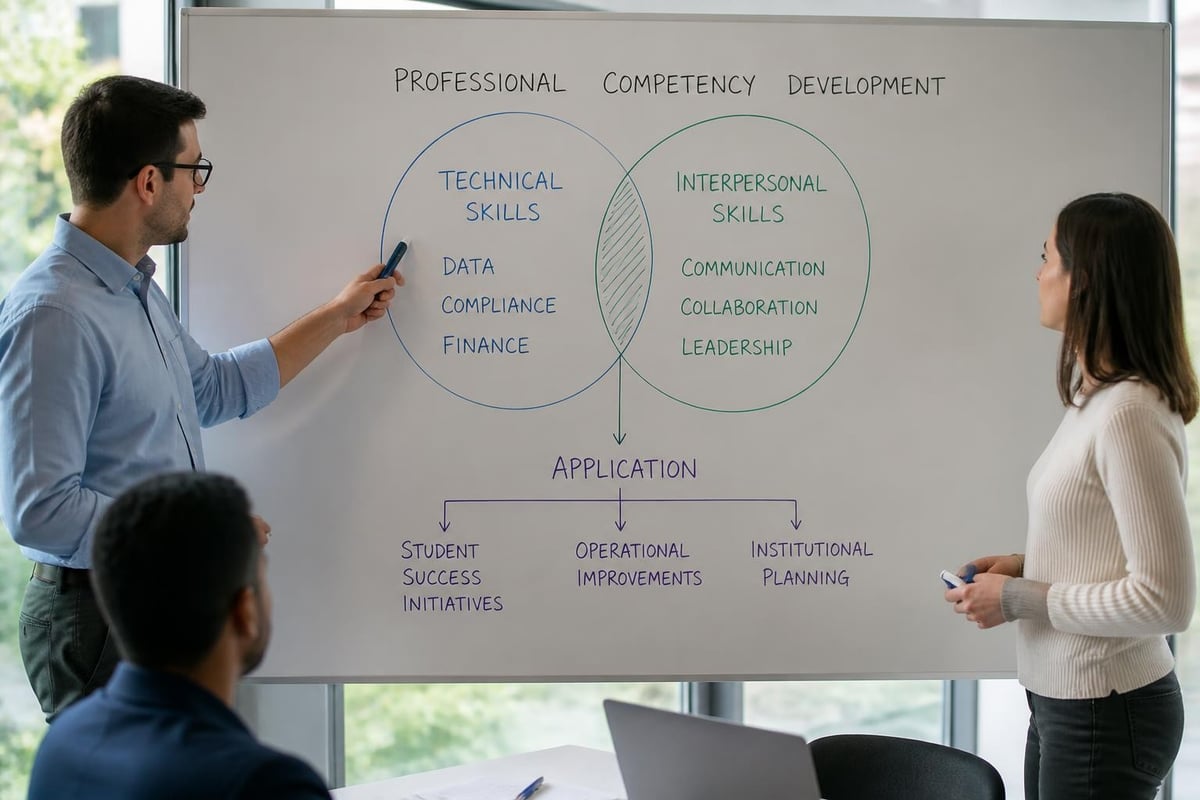
Graduate programs in higher education administration build both technical expertise and interpersonal capabilities essential for effective leadership.
Technical Competencies
Data literacy and assessment skills enable administrators to make evidence-based decisions. Professionals must interpret enrollment trends, analyze retention data, and evaluate program effectiveness. Many institutions now require administrators to demonstrate proficiency with learning management systems, student information systems, and analytics platforms.
Regulatory compliance knowledge protects institutions from legal and financial risk. Administrators navigate Title IX requirements, FERPA privacy regulations, accreditation standards, and state-specific policies. The Council for the Advancement of Standards provides professional standards that guide program development and assessment in functional areas.
Budget management capabilities are increasingly critical as institutions face financial pressures. Understanding resource allocation, cost-benefit analysis, and fiscal planning distinguishes effective administrators from their peers.
Interpersonal and Leadership Skills
Strong communication across diverse stakeholder groups is fundamental. Administrators interact with students, faculty, trustees, parents, community partners, and external regulators, each requiring tailored messaging and relationship-building approaches.
- Conflict resolution techniques help navigate disagreements between students, faculty disputes, and organizational tensions
- Cultural competence ensures inclusive practices and equitable outcomes for diverse populations
- Change management expertise facilitates institutional transformation during strategic initiatives
- Collaborative leadership builds consensus across decentralized organizational structures
Effective administrators balance competing priorities while maintaining focus on institutional mission and student success.
Program Selection and Admission Considerations
Choosing the right m ed higher education administration program requires careful evaluation of multiple factors aligned with personal and professional goals.
Accreditation and Program Quality
Regional accreditation of the institution is essential for degree credibility and potential transfer of credits. Specialized accreditation from organizations like CACREP (for counseling-focused tracks) adds additional validation.
Prospective students should examine:
- Faculty credentials and research in higher education and student affairs
- Practicum or internship requirements providing hands-on experience
- Alumni career outcomes and placement rates
- Professional association affiliations indicating industry connections
The University Of Gold Coast offers comprehensive academic programs with experienced faculty who bring both scholarly expertise and practical administrative experience to the classroom.
Delivery Format Options
Modern m ed higher education administration programs offer flexibility:
| Format | Best For | Considerations |
|---|---|---|
| On-Campus | Career changers, recent graduates | Intensive networking, full immersion |
| Online | Working professionals, remote learners | Self-discipline required, flexible scheduling |
| Hybrid/Low-Residency | Mid-career administrators | Combines flexibility with face-to-face connection |
Online programs have expanded significantly, allowing professionals to advance their education without relocating or leaving current positions. Quality online programs incorporate synchronous discussions, collaborative projects, and virtual office hours that replicate on-campus learning experiences.
Admission Requirements
Typical m ed higher education administration programs require:
- Bachelor's degree from an accredited institution (any major, though education or social sciences are common)
- Minimum GPA ranging from 2.75 to 3.0 on a 4.0 scale
- Letters of recommendation from academic or professional references
- Statement of purpose articulating career goals and program fit
- Resume or CV documenting relevant experience
Some programs prefer or require professional experience in education, though entry-level candidates are often competitive with strong academic records and relevant volunteer or internship experience.
Tuition Investment and Financial Considerations
Graduate education represents a significant financial commitment that requires strategic planning and understanding of return on investment.
Cost Structures and Funding Sources
Tuition for m ed higher education administration programs in 2026 typically ranges from $400 to $1,200 per credit hour, with total program costs between $12,000 and $43,000 depending on institution type and location. Public institutions generally offer lower rates for in-state students, while private universities maintain consistent pricing regardless of residency.
Funding options include:
- Graduate assistantships combining tuition remission with stipends
- Employer tuition assistance or reimbursement programs
- Federal student loans through FAFSA
- Scholarships from professional associations and institutional foundations
- Veterans' education benefits for eligible students
Many higher education employers value professional development and support employees pursuing relevant graduate degrees, making employer partnerships particularly valuable for m ed higher education administration students.
Salary Advancement and Career ROI
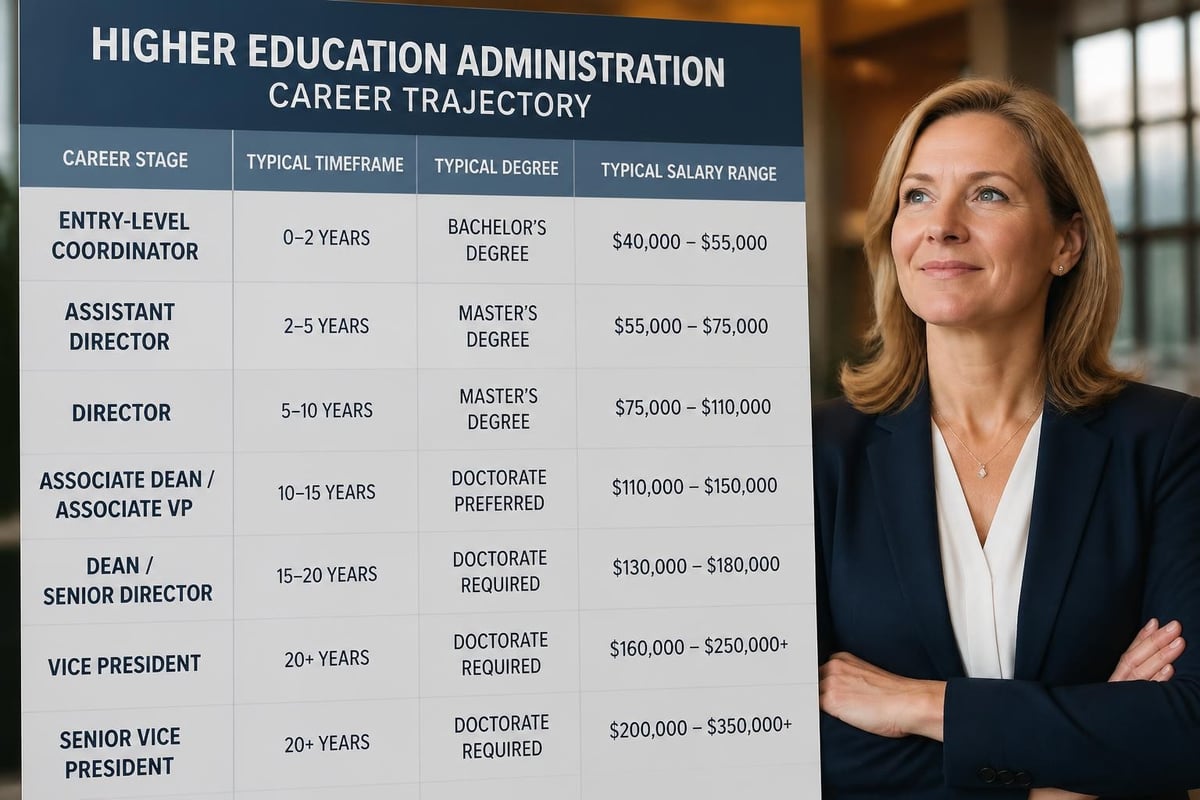
According to 2026 data, entry-level higher education administrators earn between $40,000 and $55,000 annually, while mid-level professionals with an m ed higher education administration credential earn $60,000 to $85,000. Senior administrators in dean or vice president roles command salaries ranging from $90,000 to over $150,000 depending on institution size and geographic location.
The degree typically enables salary increases of 15-25% over bachelor's-level positions in similar roles. Beyond immediate compensation, the credential opens advancement pathways that would remain closed without graduate education.
Current Trends Shaping Higher Education Administration
The higher education landscape continues evolving, creating new expectations and opportunities for administrators with specialized training.
Technology Integration and Digital Transformation
Institutions are reimagining student services through digital platforms. Administrators now oversee virtual advising, online orientation programs, chatbot-assisted student support, and data analytics dashboards. The m ed higher education administration curriculum increasingly incorporates educational technology, learning analytics, and digital strategy components.
Key technology areas include:
- Student success platforms integrating early alert systems
- Virtual reality applications for campus tours and training
- Blockchain credentials and digital badge systems
- Artificial intelligence for personalized student support
Administrators must balance technological innovation with human connection and accessibility for diverse learner populations.
Equity, Diversity, and Inclusion Initiatives
Institutions prioritize creating inclusive environments and equitable outcomes across student demographics. Higher education administrators lead initiatives addressing:
- Bias response systems and restorative justice practices
- Culturally responsive advising and mentoring programs
- Accessibility compliance and universal design principles
- First-generation and underrepresented student support services
The m ed higher education administration degree prepares professionals to design, implement, and assess diversity initiatives that advance institutional equity goals. This competency area has become central to administrative effectiveness rather than a peripheral responsibility.
Enrollment Challenges and Strategic Recruitment
Demographic shifts, declining birth rates, and changing student preferences create enrollment pressures, particularly for smaller and regional institutions. Administrators with m ed higher education administration backgrounds develop innovative recruitment strategies, retention interventions, and student success initiatives that directly impact institutional sustainability.
Successful approaches in 2026 include:
- Transfer pathway partnerships with community colleges
- Micro-credential and stackable degree programs
- Income-share agreements and alternative financing models
- Online and hybrid program expansion to new markets
- Adult learner and workforce development initiatives
These strategies require cross-functional collaboration, data-informed decision-making, and change management skills cultivated through graduate education.
Professional Development and Continued Learning
Completing an m ed higher education administration degree marks the beginning rather than the end of professional growth. Effective administrators engage in continuous learning throughout their careers.
Professional Association Engagement
Membership in organizations like NASPA (Student Affairs Administrators in Higher Education), ACPA (College Student Educators International), NACADA (Academic Advising Association), and AACRAO (American Association of Collegiate Registrars and Admissions Officers) provides networking opportunities, professional development resources, and career advancement support.
These associations offer:
- Annual conferences featuring emerging research and innovative practices
- Regional workshops and webinars on specialized topics
- Mentorship programs connecting emerging and senior professionals
- Advocacy efforts shaping higher education policy
- Certification programs demonstrating advanced expertise
Active participation in professional communities keeps administrators current with sector developments and expands professional networks essential for career mobility.
Additional Credentials and Doctoral Education
Some m ed higher education administration graduates pursue additional credentials to specialize further or advance to senior leadership. Options include:
| Credential Type | Purpose | Time Investment |
|---|---|---|
| Graduate certificates | Specialized skills (enrollment, assessment, online learning) | 12-18 credits, 1 year |
| Ed.D. (Doctor of Education) | Practitioner-focused research, senior leadership | 54-60 credits, 3-5 years |
| Ph.D. in Higher Education | Research-focused, faculty or research careers | 60-90 credits, 4-7 years |
The decision to pursue doctoral education depends on career goals, with Ed.D. programs designed for administrative practitioners and Ph.D. programs preparing scholars and researchers.
The m ed higher education administration degree has emerged as an essential credential for professionals committed to leadership in postsecondary education. Whether you're beginning your higher education career or seeking advancement opportunities, this specialized graduate education provides the theoretical foundation, practical skills, and professional network necessary for success. The University Of Gold Coast supports professionals at every stage of their academic journey with comprehensive graduate programs, extensive library resources, and dedicated student support services designed to help you achieve your educational and career goals in higher education administration.