
A master degree in science represents a strategic investment in advanced expertise, opening doors to specialized research roles, leadership positions, and competitive salaries across diverse scientific disciplines. As the global economy shifts toward knowledge-intensive industries, professionals with graduate-level training in chemistry, biology, physics, environmental science, data science, and related fields are increasingly sought after by employers. Whether you're a recent undergraduate considering next steps or a working professional seeking career advancement, understanding the landscape of science master's programs helps you make informed decisions about specialization, institution selection, and long-term career trajectory.
Understanding the Master Degree in Science Landscape
Graduate education in the sciences has evolved significantly over the past decade, responding to technological disruption and emerging research frontiers. A master degree in science typically requires one to two years of full-time study, combining advanced coursework with research components, capstone projects, or thesis work depending on program structure and institutional philosophy.
Degree Nomenclature and Variants
The most common credential is the Master of Science (MSc or M.S.), though nomenclature varies by institution and country. Some universities offer specialized designations such as Master of Applied Science (MAS), Master of Research Science (MRes), or Professional Science Master's (PSM) programs that emphasize industry partnerships and practical skill development.
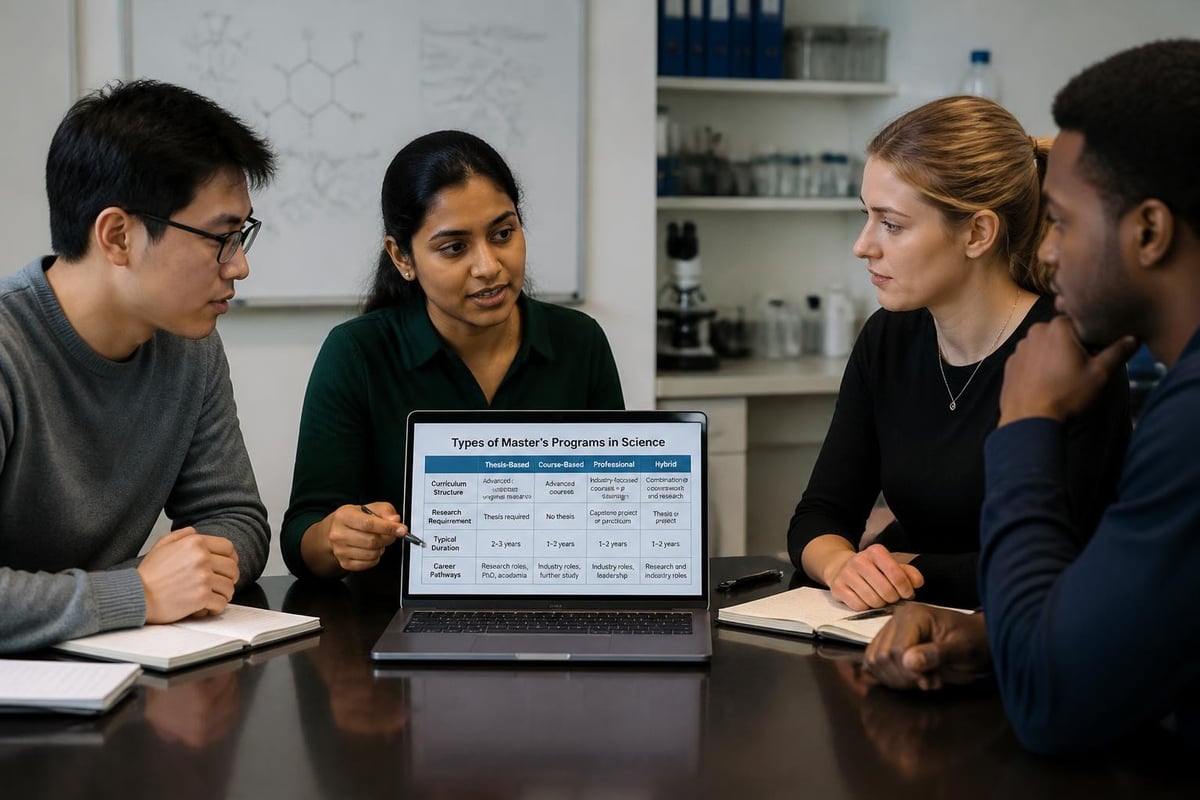
Key distinctions include:
- Thesis-based programs: Research-intensive pathways requiring original investigation and formal thesis defense
- Course-based programs: Emphasize breadth of knowledge through advanced coursework with capstone or project components
- Professional master's programs: Industry-aligned curricula focusing on translational skills and workplace applications
- Hybrid models: Combine elements of research training with professional development components
According to recent enrollment data from the Council of Graduate Schools, graduate applications rebounded significantly in 2024, with science and engineering fields showing particularly strong growth in both domestic and international applicant pools.
Global Trends Shaping Science Graduate Education
The internationalization of higher education has created both opportunities and complexities for prospective master's candidates. UNESCO’s global trends analysis highlights increasing mobility of graduate students, with science programs particularly attractive for cross-border enrollment due to standardized laboratory techniques and universal scientific language.
Contemporary master degree in science programs increasingly incorporate:
- Interdisciplinary collaboration across traditional departmental boundaries
- Computational literacy as foundational requirement regardless of specialty
- Open science practices including data sharing and reproducibility protocols
- Communication training for diverse audiences beyond academic peers
- Ethics education addressing research integrity and societal implications
Specialized Fields and Emerging Concentrations
The breadth of specializations within science master's programs reflects the expanding frontiers of scientific inquiry and application. Selecting the right concentration requires alignment between your interests, career objectives, and market demand signals.
Traditional Scientific Disciplines
Core science fields continue to offer robust master's programming with well-established career pathways. These disciplines provide foundational knowledge that transfers across sectors while allowing for sub-specialization.
| Field | Typical Focus Areas | Primary Career Sectors |
|---|---|---|
| Chemistry | Analytical, organic, physical, computational chemistry | Pharmaceuticals, materials, quality control, forensics |
| Biology | Molecular, cellular, microbiology, ecology | Biotechnology, healthcare, environmental consulting |
| Physics | Applied physics, condensed matter, optics, quantum | Engineering, technology development, instrumentation |
| Geology | Hydrogeology, petroleum geology, environmental | Energy sector, environmental remediation, mining |
High-Growth Emerging Fields
Innovation-driven sectors are creating unprecedented demand for specialized master's-level talent. The World Economic Forum’s analysis identifies specific scientific competencies experiencing accelerated growth through 2027 and beyond.
Data science and analytics programs combine statistical theory, computational methods, and domain expertise. These interdisciplinary master degree in science options prepare graduates for roles in machine learning, business intelligence, and predictive modeling across virtually every industry sector.
Climate and environmental science concentrations address urgent sustainability challenges. Curriculum typically integrates atmospheric science, ecological modeling, policy analysis, and environmental systems thinking. Graduates enter government agencies, NGOs, corporate sustainability divisions, and research organizations.
Bioinformatics and computational biology sits at the intersection of life sciences, computer science, and statistics. This specialization serves pharmaceutical development, genomic medicine, agricultural biotechnology, and basic research institutions.
Materials science and nanotechnology focuses on developing next-generation materials for energy storage, electronics, medicine, and manufacturing. Programs often bridge chemistry, physics, and engineering departments.
Career Outcomes and Economic Returns
Investment in a master degree in science yields measurable career advantages, though returns vary significantly by field, geographic market, and individual career strategy. Understanding employment patterns helps set realistic expectations and inform specialization choices.
Employment Statistics and Salary Trajectories
The National Survey of College Graduates provides granular data on employment outcomes for master's degree holders in science and engineering fields. Key findings indicate:
- Higher employment rates compared to bachelor's-only graduates in the same fields
- Salary premiums averaging 20-35% above undergraduate degree holders, varying by discipline
- Greater job stability with lower unemployment rates during economic contractions
- Increased management opportunities as credentials signal leadership readiness
Recent analysis from Nature Careers examining hiring trends reveals that employers increasingly value master's graduates for their specialized skills, research experience, and ability to contribute immediately to project teams without extensive onboarding.

Industry Sectors and Role Types
Master degree in science graduates find opportunities across diverse sectors, each offering distinct advantages in terms of mission, culture, compensation, and advancement potential.
Academic and research institutions employ graduates as research coordinators, laboratory managers, research associates, and teaching specialists. These roles often provide intellectual freedom and opportunities for continued learning, though compensation may lag private sector alternatives.
Pharmaceutical and biotechnology companies seek master's-level scientists for drug development, clinical trials coordination, regulatory affairs, and quality assurance. The industry offers competitive salaries and opportunities to contribute to therapeutic innovation.
Technology sector recruits heavily from quantitative science programs, particularly data science, computer science, and applied mathematics concentrations. Roles span data analysis, machine learning engineering, product analytics, and technical consulting.
Government agencies at federal, state, and local levels employ science graduates for environmental monitoring, public health, agricultural research, defense applications, and policy analysis. These positions offer job security and meaningful public service.
Consulting firms value the analytical rigor and problem-solving frameworks developed through science master's training. Strategy, technical, and specialized consulting roles allow graduates to apply scientific thinking to business challenges.
Application Strategy and Program Selection
Gaining admission to competitive master degree in science programs requires strategic preparation, thoughtful program research, and compelling application materials that demonstrate both academic capability and professional purpose.
Evaluating Program Quality and Fit
Not all master's programs are created equal. Critical evaluation factors include faculty research strengths, laboratory facilities and equipment, funding opportunities, career services support, and alumni outcomes.
Questions to guide your program research:
- What percentage of students receive funding through assistantships or fellowships?
- What is the typical time-to-completion for thesis and non-thesis tracks?
- How do research areas align with my specific interests and career goals?
- What industry partnerships or internship opportunities exist?
- Where do recent graduates work, and what roles do they hold?
Inside Higher Ed’s coverage of enrollment trends notes that while applications have surged, actual enrollment has moderated, suggesting increased selectivity and the importance of strategic application planning.
Building a Competitive Application
Strong master degree in science applications demonstrate academic preparation, research potential or professional experience, clear objectives, and good institutional fit.
Essential application components:
- Transcripts showing strong performance in prerequisite coursework (typically 3.0+ GPA)
- Letters of recommendation from faculty or supervisors who can speak to your capabilities and potential
- Statement of purpose articulating specific research interests, career goals, and program fit
- Standardized test scores (GRE) when required, though many programs have made testing optional
- Research experience or relevant work demonstrated through publications, presentations, or professional achievements
For thesis-track programs, contacting potential faculty advisors before applying can significantly strengthen your candidacy. Express genuine interest in their research, demonstrate familiarity with their recent publications, and articulate how your background prepares you to contribute to their laboratory.
Funding Your Graduate Education
The financial dimension of pursuing a master degree in science requires careful planning, as funding mechanisms differ substantially from doctoral programs and vary widely across institutions and fields.
Funding Sources and Financial Planning
Unlike PhD programs that typically offer full funding through assistantships and fellowships, terminal master's programs often require students to finance their education through a combination of sources.
| Funding Source | Typical Coverage | Availability | Considerations |
|---|---|---|---|
| Teaching assistantships | Tuition waiver + stipend | Competitive, limited slots | Requires time commitment (10-20 hrs/week) |
| Research assistantships | Tuition waiver + stipend | Depends on faculty grants | Aligns with specific research projects |
| Fellowships and scholarships | Varies widely | Highly competitive | Often merit-based or diversity-focused |
| Employer sponsorship | Partial to full tuition | Professional programs | May require work commitment |
| Federal student loans | Up to cost of attendance | Broadly available | Accumulates debt requiring repayment |
Cost-benefit analysis should account for opportunity cost of forgone earnings, program duration, expected salary increase post-graduation, and long-term career trajectory. Programs at institutions like University Of Gold Coast offer structured support for navigating financial decisions and accessing available funding opportunities.

Return on Investment Considerations
NCSES workforce data shows that master's degree holders in science and engineering fields experience favorable return on educational investment, particularly in high-demand specializations such as data science, computer science, and biostatistics.
Factors influencing ROI include:
- Field of study (quantitative and computational fields typically command premium compensation)
- Geographic location (major metropolitan areas and tech hubs offer higher salaries but increased cost of living)
- Program duration (one-year intensive programs minimize opportunity cost)
- Funding package (assistantships and fellowships dramatically improve net ROI)
- Career sector (private industry generally offers higher starting salaries than academia or government)
Balancing Work, Study, and Professional Development
Many candidates pursue a master degree in science while managing professional responsibilities, family obligations, or other commitments. Understanding program formats and time management strategies enables successful navigation of these competing demands.
Program Formats and Flexibility
Full-time residential programs offer immersive experiences with maximum access to faculty, laboratory facilities, and peer networks. These traditional formats typically span 12-24 months and work best for students who can dedicate themselves exclusively to graduate study.
Part-time programs accommodate working professionals by offering evening or weekend courses, extended timelines, and flexible scheduling. While taking longer to complete (typically 2-4 years), this format allows students to maintain employment and immediately apply learning to workplace contexts.
Online and hybrid programs have expanded significantly, particularly for course-based master degree in science options in fields like data science, environmental science, and public health. Quality varies substantially, making accreditation, faculty credentials, and program reputation critical evaluation factors.
Professional science master's programs explicitly designed for working professionals combine online coursework with intensive on-campus residencies, industry projects, and applied learning experiences.
Maximizing Your Graduate Experience
Success in master's programs extends beyond coursework completion. Strategic engagement with the broader graduate experience builds competencies, networks, and credentials that differentiate you in the job market.
- Attend and present at conferences to build visibility and practice communicating your work
- Pursue publication opportunities even if not required, demonstrating research impact
- Develop technical and computational skills through workshops, online courses, and self-study
- Build professional networks through scientific societies, alumni connections, and industry events
- Seek mentorship from faculty, industry advisors, and senior graduate students
Professional development programming, often coordinated through graduate schools or career services, helps master's students articulate transferable skills, prepare for job searches, and navigate career transitions effectively.
Preparing for Your Master's Journey
Successful transition into graduate-level work requires both intellectual preparation and practical readiness. The months before program start offer valuable opportunities to position yourself for success.
Pre-Enrollment Preparation
Strengthen quantitative and computational foundations through online courses, tutorials, or community college classes if needed. Master degree in science programs assume facility with statistics, programming, and mathematical modeling appropriate to the discipline.
Review foundational content in your field by reading recent review articles, refreshing undergraduate coursework, and familiarizing yourself with current research frontiers. This preparation accelerates your first-semester adjustment and enables more sophisticated engagement with advanced material.
Develop professional tools and habits including reference management software (Zotero, Mendeley), version control systems (Git), data analysis platforms (R, Python, MATLAB), and academic writing practices. Early investment in these competencies pays dividends throughout your program.
Connect with incoming cohort members through program social media, orientation events, or informal gatherings. Peer networks provide academic support, emotional encouragement, and collaborative opportunities throughout graduate school.
Setting Yourself Up for Success
Time management becomes critical as you juggle multiple courses, research or project work, assistantship responsibilities, and personal commitments. Successful students develop sustainable routines, set boundaries, and ask for help when needed.
Create dedicated work environments that minimize distractions and signal focus time. Whether on campus, at home, or in libraries, consistent spaces support productivity and help separate work from personal life.
Communicate proactively with advisors, course instructors, and project supervisors. Graduate education involves greater autonomy than undergraduate studies, requiring you to advocate for your needs, seek clarification, and initiate discussions about progress and goals.
Prioritize well-being through exercise, sleep, social connection, and stress management. The intensity of master's programs can lead to burnout without intentional attention to physical and mental health.
A master degree in science offers transformative potential for career advancement, intellectual growth, and contribution to fields addressing society's most pressing challenges. Success depends on strategic program selection, committed engagement, and clear alignment between your goals and graduate training pathways. The University Of Gold Coast provides comprehensive academic programs including MSc degrees across diverse scientific disciplines, supported by extensive resources, experienced faculty, and dedicated student services designed to help you achieve your educational and professional objectives.