
The landscape of advanced learning continues to evolve at an unprecedented pace, offering students and professionals a vast array of pathways to achieve their academic and career goals. Whether you're considering a doctorate, a specialized master's degree, or a professional diploma, understanding the full spectrum of options available has never been more critical. The decisions you make today about your educational trajectory will shape not only your career prospects but also your intellectual growth and professional network for decades to come.
Understanding the Modern Academic Landscape
Higher education programs have transformed dramatically over the past decade, moving beyond traditional classroom-based instruction to embrace flexible, technology-enabled learning models. Today's institutions offer everything from research-intensive doctoral programs to practice-focused professional certifications, each designed to meet specific career and personal development objectives.
The diversity of program types reflects the changing demands of the global workforce. Students can now pursue specialized degrees in emerging fields while maintaining full-time employment, thanks to online and hybrid delivery models. This flexibility has opened doors for working professionals who might have found traditional campus-based programs inaccessible.
Key Categories of Academic Programs
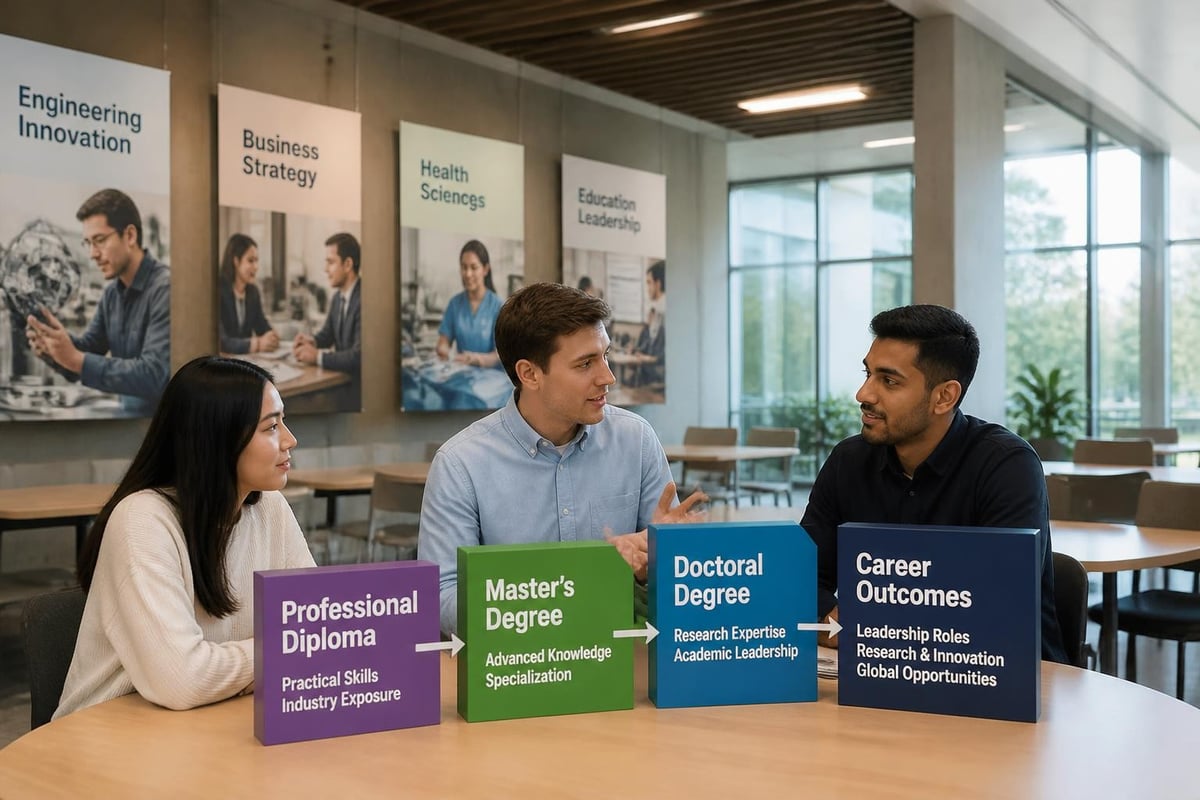
Modern universities typically organize their offerings into several distinct tiers, each serving different purposes and requiring varying levels of commitment:
- Doctoral programs (PhD, DBA) for original research and academic careers
- Master's degrees (MBA, MSc, MA, LLM) for advanced specialization and leadership roles
- Professional diplomas and certificates for targeted skill development
- Executive education for senior professionals seeking specific competencies
- Online and hybrid programs offering flexibility for working adults
According to the UNESCO Global Education Monitoring Report, enrollment in tertiary education worldwide has grown substantially, with institutions adapting their program structures to accommodate diverse student populations and learning preferences.
Research-Intensive Doctoral Programs
Doctoral programs represent the pinnacle of academic achievement, designed for individuals who wish to contribute original knowledge to their chosen field. A PhD program typically requires three to seven years of intensive study, culminating in a dissertation that advances theoretical or applied understanding in a specific domain.
The structure of doctoral studies varies by discipline but generally includes coursework, comprehensive examinations, and extensive independent research. Students work closely with faculty advisors who guide their research trajectory and provide mentorship throughout the program. This relationship often becomes one of the most valuable aspects of the doctoral experience, opening doors to collaborative research opportunities and professional networks.
Choosing the Right Doctoral Path
When evaluating PhD programs, prospective students should consider several critical factors:
- Research alignment between your interests and faculty expertise
- Funding opportunities including assistantships, fellowships, and grants
- Program structure and timeline flexibility
- Career outcomes for recent graduates in your field
- Institutional resources such as libraries, laboratories, and research centers
The University Of Gold Coast offers doctoral programs across multiple disciplines, providing students with access to comprehensive research facilities and experienced faculty supervision. These programs emphasize both theoretical rigor and practical application, preparing graduates for academic, research, and senior leadership positions.
Professional Master's Degrees
Master's programs serve as the workhorse of higher education programs, attracting the largest number of graduate students worldwide. These degrees typically require one to two years of full-time study and focus on developing advanced knowledge and practical skills in a specific field.
The MBA remains one of the most popular professional degrees globally, designed to develop business acumen, leadership capabilities, and strategic thinking. Modern MBA programs have evolved to include specializations in areas such as entrepreneurship, finance, marketing, and international business. Many programs now offer flexible schedules, allowing working professionals to complete their degrees while maintaining their careers.
Specialized Master's Programs
Beyond the MBA, universities offer numerous specialized master's degrees tailored to specific professions and industries:
| Program Type | Typical Duration | Primary Focus | Career Outcomes |
|---|---|---|---|
| MSc (Master of Science) | 1-2 years | Technical and scientific fields | Research, technical leadership, specialized roles |
| LLM (Master of Laws) | 1 year | Advanced legal specialization | Legal practice, policy, academia |
| MA (Master of Arts) | 1-2 years | Humanities and social sciences | Education, research, cultural institutions |
| MEd (Master of Education) | 1-2 years | Educational theory and practice | School leadership, curriculum development |
Quality assurance in these programs remains paramount. The Council for Higher Education Accreditation provides comprehensive guidance on accreditation standards, helping students identify programs that meet rigorous quality benchmarks. Accreditation ensures that higher education programs maintain consistent academic standards and prepare graduates effectively for professional practice.

Professional Diplomas and Certificates
Not all advanced learning requires a full degree program. Professional diplomas and certificate programs offer focused, practical training in specific skill areas, typically completed in six months to one year. These programs appeal to working professionals seeking to enhance their credentials without committing to multi-year degree programs.
Professional diplomas bridge the gap between undergraduate education and full master's programs, often serving as stepping stones for students who wish to test a field before committing to more extensive study. Many institutions allow diploma credits to transfer toward degree programs, creating flexible pathways for lifelong learners.
Value Proposition of Shorter Programs
The advantages of certificate and diploma programs include:
- Time efficiency with focused curricula and accelerated schedules
- Cost effectiveness compared to full degree programs
- Immediate application of skills in current professional roles
- Career pivoting opportunities without lengthy commitments
- Stackable credentials that build toward degrees over time
Recent data from the National Center for Education Statistics shows growing enrollment in sub-baccalaureate programs and professional certificates, reflecting changing student preferences and employer demands for specific, demonstrable skills.
Delivery Methods and Learning Modalities
The COVID-19 pandemic accelerated a transformation already underway in how higher education programs are delivered. Today's students can choose from multiple learning formats, each with distinct advantages and considerations.
Traditional on-campus programs continue to offer immersive experiences with face-to-face interaction, hands-on laboratory work, and vibrant campus communities. These programs suit students seeking full-time study and the traditional collegiate experience.
Online and Hybrid Options
Online programs have matured significantly, with sophisticated learning management systems, virtual collaboration tools, and interactive multimedia content creating engaging educational experiences. Hybrid models combine the flexibility of online learning with periodic in-person intensive sessions, offering a balanced approach.
The effectiveness of these delivery methods depends largely on program design and student discipline. Research from the National Survey of Student Engagement demonstrates that well-designed online programs can achieve learning outcomes comparable to traditional formats when they incorporate active learning strategies and regular student-faculty interaction.
Students at institutions like the University Of Gold Coast benefit from flexible learning options supported by comprehensive online libraries and student portals, enabling them to access resources and participate in their programs regardless of geographic location.
Accreditation and Quality Assurance
The value of any academic credential depends heavily on the institution's accreditation status and reputation. Accreditation serves as the primary mechanism for quality assurance in higher education programs, providing external validation that an institution meets established standards for faculty qualifications, curriculum rigor, student services, and learning outcomes.
Understanding different types of accreditation helps students make informed choices. Regional accreditation applies to entire institutions and is generally considered the gold standard in the United States. Programmatic accreditation focuses on specific disciplines, particularly in fields such as business, law, engineering, and health professions.
Evaluating Program Quality
Beyond formal accreditation, prospective students should examine several quality indicators:
- Faculty credentials and research productivity
- Student-to-faculty ratios and class sizes
- Career placement rates and employer partnerships
- Alumni network strength and engagement
- Resources including libraries, technology, and student support services
The World Bank’s Tertiary Education & Skills program emphasizes the importance of quality assurance mechanisms in ensuring that higher education programs contribute effectively to economic development and social mobility. Strong programs create clear pathways from education to employment, with curriculum aligned to labor market needs.

Access, Equity, and Enrollment Trends
Despite expanding opportunities, significant disparities persist in access to higher education programs. Research from the Brookings Institution highlights how gaps in academic preparation create enrollment disparities along socioeconomic and demographic lines, affecting who can pursue advanced degrees.
Institutions have responded with various initiatives to broaden access, including need-based financial aid, bridge programs for underprepared students, and partnerships with community colleges to create transfer pathways. Many universities now offer income-share agreements and flexible payment plans to reduce financial barriers.
Demographic Shifts in Graduate Education
Current enrollment data reveals several noteworthy trends:
- Increasing participation by women in STEM graduate programs
- Growth in international student enrollment despite periodic policy challenges
- Rising average age of graduate students as more working professionals pursue degrees
- Greater demand for part-time and flexible program options
- Expansion of programs in interdisciplinary and emerging fields
These shifts require institutions to adapt their program designs, delivery methods, and support services to meet diverse student needs. Public perception of higher education, tracked by organizations like Pew Research Center, influences enrollment decisions and policy debates about the value and affordability of advanced degrees.
Field-Specific Considerations
Different academic disciplines require distinct program structures and learning approaches. Business programs emphasize case studies, teamwork, and practical application of concepts. Law programs focus on analytical reasoning, legal research, and writing skills. Theology and religious studies programs combine textual analysis, historical context, and contemporary application.
Business and Management Programs
MBA and specialized business master's programs prepare students for leadership roles across industries. Core curricula typically cover finance, marketing, operations, strategy, and organizational behavior. Specializations allow students to develop expertise in areas such as data analytics, sustainable business practices, or healthcare management.
Top business programs integrate real-world projects, corporate partnerships, and international study opportunities. Executive MBA formats cater specifically to experienced professionals, offering weekend or modular schedules that accommodate demanding careers.
Legal Education and LLM Programs
The Master of Laws (LLM) degree serves several purposes: allowing international lawyers to study another jurisdiction's legal system, enabling domestic lawyers to specialize in areas like tax or intellectual property, and preparing graduates for academic careers in law.
LLM programs typically require one year of full-time study and may include coursework, seminars, and a substantial research paper. Some programs target specific practice areas, while others offer broader exposure to a legal system or comparative law perspectives.
Professional Development Across Disciplines
Regardless of field, effective higher education programs share common characteristics:
| Element | Purpose | Implementation |
|---|---|---|
| Theoretical foundation | Deep understanding of concepts | Rigorous coursework and reading |
| Practical application | Skill development | Projects, internships, simulations |
| Research training | Critical thinking and inquiry | Thesis, dissertation, capstone projects |
| Professional networking | Career advancement | Alumni events, industry partnerships |
| Ethical framework | Responsible practice | Case discussions, professional standards |
These elements combine to create comprehensive learning experiences that prepare graduates for complex professional challenges.
Return on Investment and Career Outcomes
One of the most pressing questions prospective students ask concerns the return on investment of higher education programs. With tuition costs rising and student debt levels increasing, understanding the financial implications of graduate education has become essential.
The ROI calculation must account for both direct costs (tuition, fees, materials) and opportunity costs (foregone earnings during study). Benefits include higher lifetime earnings, expanded career options, professional networks, and personal fulfillment from advanced learning.
Measuring Program Value
Career outcomes vary significantly by field, degree level, and individual circumstances. Generally, professional master's degrees in high-demand fields offer strong financial returns, while doctoral programs in humanities may offer greater intellectual than financial rewards.
Prospective students should research:
- Median starting salaries for recent graduates in their target field
- Time to degree completion and associated costs
- Loan repayment terms and interest rates
- Career advancement patterns for degree holders versus non-degree holders
- Job placement rates and employer recruitment activities
Many institutions, including those featured on higher education resource pages, now publish detailed career outcomes data, providing transparency about graduate employment and salary trends.
Selecting the Right Program
Choosing among higher education programs requires careful self-assessment and thorough research. Students must align their academic interests, career goals, financial resources, and personal circumstances with program characteristics.
Begin by clarifying your objectives. Are you seeking career advancement, career change, intellectual growth, or credentialing for professional practice? Different goals suggest different program types and priorities.
The Decision Framework
A systematic approach to program selection includes:
- Self-assessment of interests, strengths, and career aspirations
- Market research on field growth, salary trends, and employer demand
- Program comparison across institutions, considering quality indicators
- Financial planning including aid opportunities and budget constraints
- Personal fit evaluation of culture, location, and learning format
Visit campuses when possible, attend information sessions, and connect with current students and alumni. These interactions provide insights that published materials cannot capture. The comprehensive resources many universities offer online help prospective students explore program details, faculty profiles, and admission requirements.
Global Perspectives on Advanced Education
Higher education programs operate within a global context, with students increasingly mobile and employers valuing international experience. Understanding how different countries approach graduate education can inform your program selection and career planning.
European programs often follow the Bologna Process structure, with one-year master's programs and three-year doctorates. Asian universities have rapidly expanded their graduate offerings, often with strong government support for research and development. Australian institutions emphasize professional training and industry partnerships.
International Recognition and Transferability
For students considering international study or careers, credential recognition becomes crucial. Some professions have international frameworks for degree equivalency, while others require country-specific certification or additional study.
Research whether your target field has international professional organizations that facilitate credential recognition. Investigate whether institutions hold international accreditations in addition to national ones, as this can enhance global mobility.
Higher education programs offer transformative opportunities for intellectual growth, professional advancement, and personal development across diverse fields and formats. Success requires matching your goals with the right program structure, delivery method, and institutional resources while maintaining realistic expectations about costs, time commitment, and outcomes. Whether you're pursuing a PhD in theology, an MBA in international business, an MSc in a technical field, or an LLM in specialized legal practice, University Of Gold Coast provides comprehensive academic programs supported by extensive resources including online libraries and dedicated student portals designed to support your journey from enrollment through graduation and beyond.