
Pursuing a Master of Science (MS) degree in Australia has become increasingly attractive to international students seeking world-class education combined with excellent career prospects. Australia's universities consistently rank among the world's best, offering innovative research opportunities, diverse specializations, and a multicultural learning environment. This comprehensive guide explores the essential aspects of completing an MS in Australia, from program selection and admission requirements to visa procedures, living costs, and post-study work opportunities that can shape your professional future.
Understanding the Australian Master's Landscape
Australia's higher education system offers two primary types of master's degrees: coursework-based programs and research-intensive programs. The MS in Australia typically refers to coursework master's degrees in science, technology, engineering, and related fields, though the distinction can vary by institution.
Types of Master's Programs
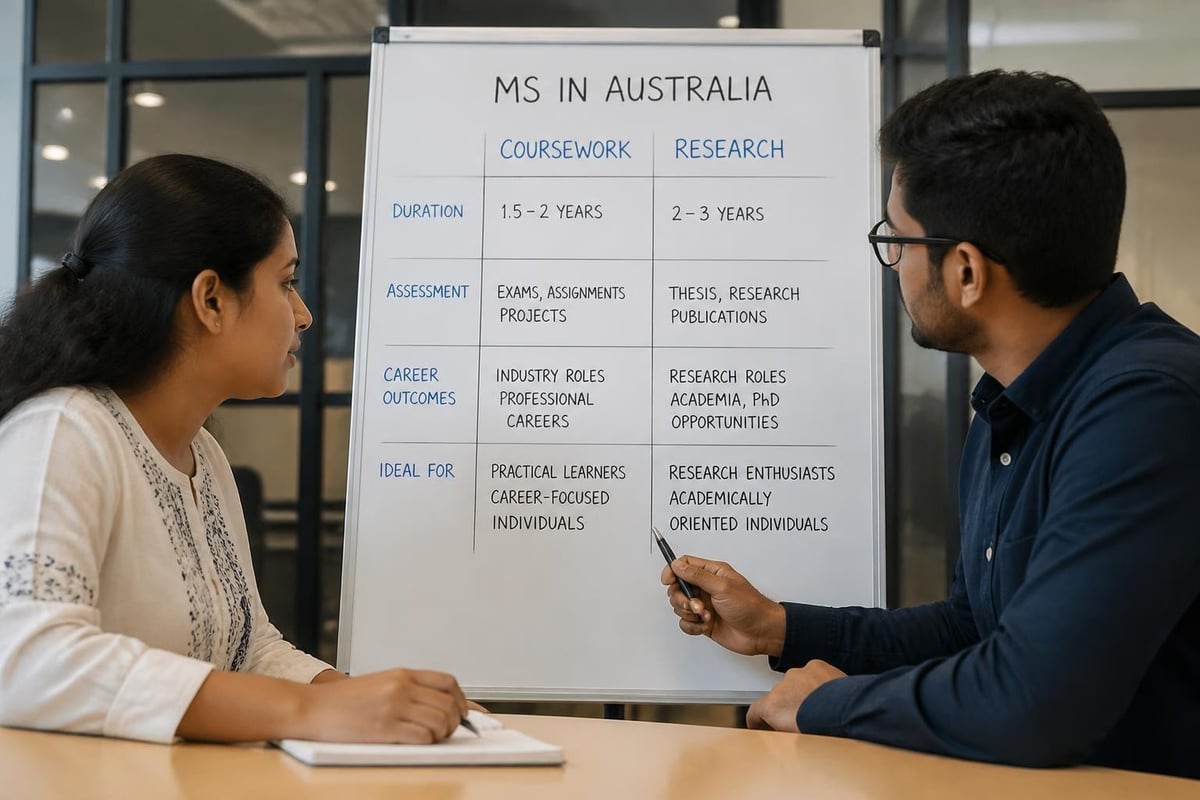
Coursework master's programs emphasize structured learning through lectures, seminars, and practical projects. These programs typically span one to two years and focus on developing professional skills and specialized knowledge in fields such as data science, biotechnology, environmental science, and information technology.
Research master's programs, conversely, prioritize independent investigation under faculty supervision. Students pursuing this path conduct original research, contributing new knowledge to their field while developing critical analytical capabilities.
Key differences include:
- Duration: Coursework programs (1-2 years) versus research programs (2-3 years)
- Assessment: Exams and assignments versus thesis defense
- Career path: Industry roles versus academic or research positions
- Entry requirements: Professional experience valued versus research background emphasized
Top Universities and Program Selection
Australia hosts 43 universities, with several consistently ranking in global top 100 lists. The Group of Eight universities-including the University of Melbourne, Australian National University, and University of Sydney-are particularly renowned for their postgraduate programs.
When selecting an MS in Australia program, prospective students should evaluate multiple factors beyond rankings. Specialization alignment with career goals, research facilities, industry connections, and location all significantly impact the educational experience and outcomes.
| University Tier | Program Duration | Average Annual Fees (AUD) | Key Strengths |
|---|---|---|---|
| Group of Eight | 1.5-2 years | $35,000-$50,000 | Research excellence, global reputation |
| Australian Technology Network | 1.5-2 years | $30,000-$45,000 | Industry partnerships, practical focus |
| Regional Universities | 1-2 years | $25,000-$40,000 | Affordable fees, pathway to regional migration |
The Quality Indicators for Learning and Teaching (QILT) provides valuable data on graduate outcomes, helping prospective students make informed decisions based on employment rates and salary benchmarks across different fields and institutions.
Emerging Specializations for 2026
Australia's MS programs increasingly reflect global industry demands. Artificial intelligence, cybersecurity, renewable energy engineering, and climate science have emerged as high-growth specializations with strong employment prospects.
Programs integrating practical components such as internships, industry projects, and professional certifications enhance employability. Many universities partner with leading Australian and multinational corporations to provide students with real-world experience during their studies.
Admission Requirements and Application Process
Entry standards for an MS in Australia vary by institution and program, but certain requirements remain consistent across most universities. Understanding these prerequisites helps candidates prepare competitive applications.
Academic Qualifications
Most programs require a bachelor's degree in a related field with a minimum grade point average. Australian universities typically use a 7-point GPA scale, with most MS programs requiring a minimum of 5.0 (equivalent to approximately 65-70% or a second-class honors upper division).
Common academic requirements include:
- Relevant undergraduate degree (three or four-year bachelor's)
- Minimum GPA threshold (varies by university competitiveness)
- Prerequisite coursework in specific subjects
- Academic transcripts and degree certificates
English Language Proficiency
International students must demonstrate English proficiency through standardized tests. IELTS remains the most widely accepted examination, though universities also recognize TOEFL, PTE Academic, and Cambridge English exams.
Typical minimum scores for an MS in Australia include IELTS 6.5 overall (with no band below 6.0) or TOEFL iBT 79-90. Competitive programs or those in specialized fields may require higher scores.
Additional Application Materials
Beyond academic credentials, strong applications incorporate compelling personal statements, relevant work experience documentation, and persuasive letters of recommendation. Research-oriented programs may require a research proposal outlining intended study areas.
The application timeline typically spans several months, with most universities opening applications 8-12 months before program commencement. Australia's academic year begins in February/March (Semester 1) with a secondary intake in July (Semester 2).
Student Visa Requirements and Process
International students pursuing an MS in Australia must obtain a Student visa (Subclass 500). The Department of Home Affairs Student visa requirements outline specific conditions and documentation needed for successful applications.
Genuine Temporary Entrant Requirement
Visa applicants must satisfy immigration authorities that they genuinely intend to stay temporarily in Australia for study purposes. This assessment considers academic qualifications, immigration history, financial circumstances, and stated intentions regarding study and employment.
Key documentation includes:
- Confirmation of Enrolment (CoE) from an Australian university
- Evidence of financial capacity to cover tuition and living expenses
- Overseas Student Health Cover (OSHC) for visa duration
- English proficiency test results
- Academic transcripts and qualifications
- Statement of purpose explaining study intentions
Financial Requirements
Students must demonstrate access to sufficient funds covering tuition fees, living expenses (currently AUD 24,505 per year for individual students), travel costs, and school costs for dependent children if applicable. Evidence can include bank statements, financial undertakings from sponsors, or approved education loan documentation.
Processing times vary but typically range from 4-8 weeks. Early application submission, well before program commencement, allows sufficient time for any additional documentation requests or health examinations.
Living Costs and Financial Planning
Understanding the complete financial picture is essential for students planning an MS in Australia. Beyond tuition fees, accommodation, food, transport, and personal expenses significantly impact the total investment required.
Cost Breakdown by City
Australian cities vary considerably in living costs, with Sydney and Melbourne ranking as the most expensive, while Adelaide, Perth, and regional centers offer more affordable options.
| City | Weekly Rent (Shared) | Monthly Living Costs | Annual Total |
|---|---|---|---|
| Sydney | $250-$350 | $2,000-$2,800 | $24,000-$33,600 |
| Melbourne | $230-$330 | $1,900-$2,600 | $22,800-$31,200 |
| Brisbane | $200-$280 | $1,700-$2,300 | $20,400-$27,600 |
| Adelaide/Perth | $180-$250 | $1,500-$2,100 | $18,000-$25,200 |
The official Study Australia guidance provides comprehensive cost estimates and budgeting tools to help prospective students plan financially for their studies.
Scholarship Opportunities
Numerous scholarships support international students pursuing an MS in Australia. Australia Awards, Research Training Program (RTP) scholarships, and university-specific merit awards can significantly reduce financial burden.
Many institutions offer partial tuition waivers or living allowances for high-achieving students. Early research and application to scholarship programs, often 6-12 months before program commencement, maximizes chances of success.
Work Rights and Employment During Studies
Student visa holders pursuing an MS in Australia can work up to 48 hours per fortnight during semester and unlimited hours during scheduled breaks. This provides valuable income supplementation and professional experience opportunities.
Part-Time Employment Sectors
International students commonly find employment in hospitality, retail, tutoring, and administrative roles. Those with specialized skills may secure positions aligned with their field of study, enhancing both finances and professional development.
Average wages for casual employment range from AUD 25-35 per hour, allowing students to earn approximately AUD 800-1,400 monthly while adhering to work hour restrictions.
Popular employment sectors include:
- Campus jobs (research assistant, library, student services)
- Retail and customer service roles
- Hospitality industry positions
- Tutoring and educational support
- Internships and industry placements related to studies
University career services and student portals provide job boards, resume workshops, and networking events connecting students with employers. Resources available through institutions like University Of Gold Coast help students prepare for both part-time work and career advancement opportunities.
Post-Study Work Opportunities
One of the most attractive aspects of completing an MS in Australia is access to post-study work rights through the Temporary Graduate visa (Subclass 485). This visa allows graduates to remain in Australia and gain professional experience after completing their degree.
Temporary Graduate Visa Streams
The Temporary Graduate visa offers two main pathways: the Graduate Work stream for graduates with skills and qualifications related to an occupation on Australia's skilled occupation lists, and the Post-Study Work stream for graduates who have completed higher education degrees.
Master's by coursework graduates typically qualify for the Post-Study Work stream, receiving 2-3 years of work rights depending on their qualification level and study location. Students completing degrees in regional areas may receive additional time.

Employment Outcomes for Master's Graduates
Master's graduates in Australia enjoy strong employment prospects across sectors. Technology, engineering, healthcare, finance, and research industries actively recruit qualified graduates with advanced degrees.
The median full-time salary for master's graduates in 2026 ranges from AUD 75,000 to AUD 95,000 depending on field and location, with specialized areas such as data science and engineering commanding premium compensation.
Several pathways to permanent residency exist for skilled graduates, including employer-sponsored visas and skilled independent migration options. Professional experience gained during post-study work rights strengthens applications while providing valuable career development.
Health Insurance and Student Welfare
Overseas Student Health Cover (OSHC) is mandatory for all international students holding a Student visa. This insurance covers basic medical services, hospital treatment, ambulance services, and limited pharmaceuticals during the entire visa period.
OSHC Providers and Coverage
Major OSHC providers include Allianz, BUPA, and Medibank, with annual premiums ranging from AUD 450-600 for single coverage. Universities often have preferred providers offering streamlined enrollment processes.
Students should understand coverage limitations and consider additional private insurance for dental, optical, and enhanced hospital coverage not included in basic OSHC policies.
Cultural Adaptation and Student Support
Australia's multicultural society welcomes international students, with universities providing extensive support services facilitating successful transitions. Orientation programs, peer mentoring, academic skills workshops, and counseling services help students adapt to new educational and cultural environments.
Academic Culture and Expectations
Australian universities emphasize critical thinking, independent learning, and active class participation. Assessment methods include individual and group projects, presentations, research papers, and practical examinations beyond traditional written tests.
Understanding academic integrity standards, plagiarism policies, and proper citation practices is essential. Universities provide writing centers and academic skills advisors supporting students in meeting these expectations.
Support services typically include:
- Academic writing and study skills workshops
- Mental health and wellbeing counseling
- Career development and employability programs
- International student advisors
- Cultural adjustment support groups
- Language and communication assistance
Regional Study Options and Benefits
While major cities attract most international students, regional universities offer distinct advantages for those pursuing an MS in Australia. Lower living costs, smaller class sizes, stronger community connections, and additional migration benefits make regional study increasingly attractive.
Regional Migration Incentives
Students studying in designated regional areas receive bonus points for skilled migration applications and extended post-study work rights. Cities including Newcastle, Wollongong, Geelong, Gold Coast, Sunshine Coast, Adelaide, Perth, and Hobart qualify as regional areas under current immigration policy.
Regional universities often provide more personalized attention, enhanced industry connections within local communities, and unique research opportunities aligned with regional strengths such as agriculture, marine science, or mining technology.
Application Strategy and Timeline
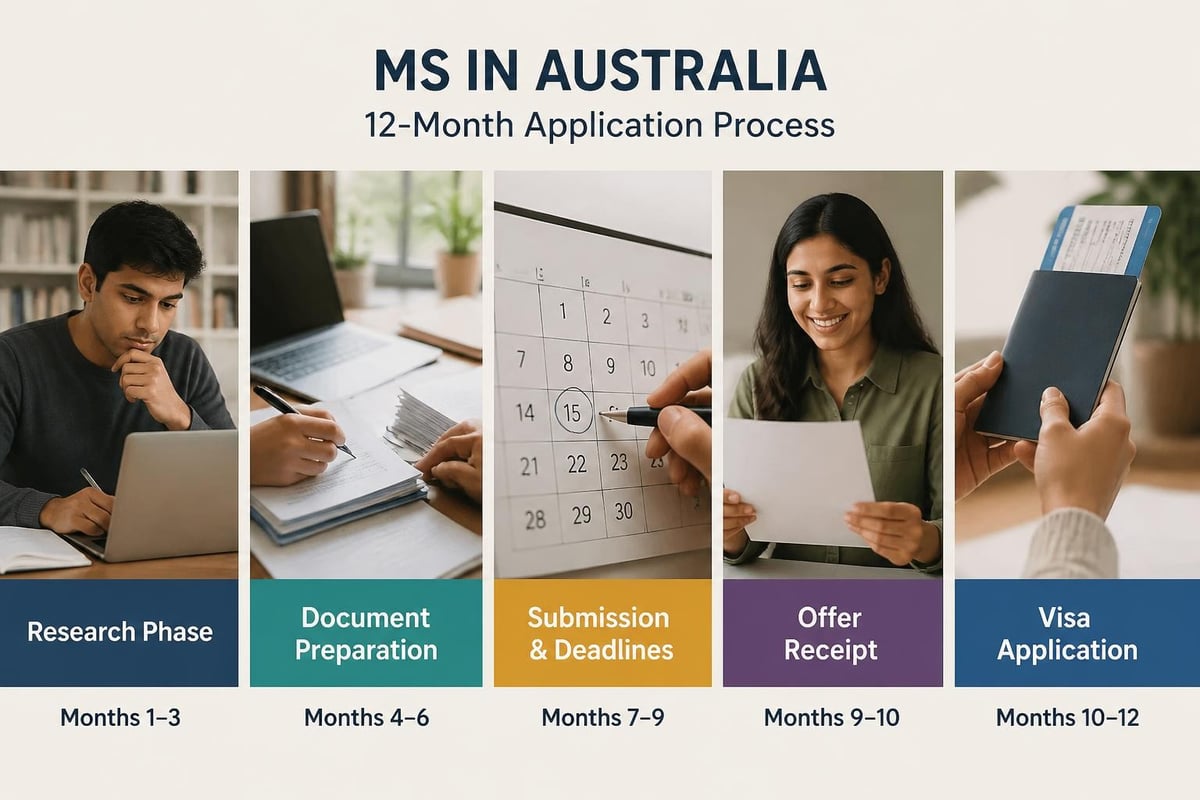
Successful applicants to competitive MS in Australia programs begin preparations 12-18 months before intended commencement. This timeline allows for thorough research, standardized test preparation, application development, and visa processing.
Month-by-Month Planning Guide
18-12 months before:
- Research programs, universities, and specializations
- Assess academic eligibility and identify any gaps
- Begin English proficiency test preparation
- Research scholarship opportunities
12-9 months before:
5. Take English proficiency tests
6. Finalize program shortlist
7. Gather academic transcripts and references
8. Draft personal statements
9-6 months before:
9. Submit applications to selected universities
10. Apply for scholarships
11. Arrange financial documentation
12. Research accommodation options
6-3 months before:
13. Receive offers and accept preferred program
14. Pay initial fees and obtain CoE
15. Arrange OSHC coverage
16. Lodge Student visa application
3-0 months before:
17. Receive visa approval
18. Book flights and arrange accommodation
19. Attend pre-departure orientations
20. Prepare for arrival and program commencement
Industry Connections and Internship Opportunities
Australian universities increasingly integrate industry experience into MS in Australia programs. Cooperative education placements, industry projects, and internship requirements provide students with practical experience while building professional networks.
Technology companies, research institutions, government agencies, and multinational corporations actively partner with universities to offer placement opportunities. These experiences frequently lead to employment offers before program completion.
Students should actively engage with career services early in their programs, attend industry networking events, and pursue relevant certifications or professional memberships enhancing employability in their chosen fields.
Research Opportunities and Innovation Ecosystem
Australia invests significantly in research and development, creating opportunities for MS in Australia students to engage with cutting-edge projects. Universities collaborate with industry partners, government research organizations like CSIRO, and international institutions on innovative research initiatives.
Students interested in research careers can participate in supervised research projects, contribute to academic publications, and present findings at conferences. These experiences strengthen applications for PhD programs or research positions in industry or academia.
The innovation ecosystem extends beyond universities, with technology hubs, startup incubators, and research parks providing additional engagement opportunities. Cities like Sydney, Melbourne, Brisbane, and Adelaide host vibrant innovation communities where students can connect with entrepreneurs, investors, and industry leaders.
Pursuing an MS in Australia represents a significant investment in your professional future, offering world-class education, diverse specializations, valuable work experience, and potential migration pathways. Success requires careful planning, from selecting the right program and preparing strong applications to understanding visa requirements and financial commitments. Whether you're interested in advanced coursework programs, research opportunities, or industry-focused specializations, Australia's universities provide comprehensive support throughout your academic journey and beyond. University Of Gold Coast offers robust academic programs and extensive resources including online libraries and student portals to support your professional development, helping you take the next step toward achieving your educational and career goals.