
Ireland has emerged as a premier destination for postgraduate education, offering rigorous academic standards, vibrant research communities, and exceptional career prospects. Masters from Ireland attract thousands of international students annually who seek quality education within the European Higher Education Area. The Irish system provides diverse pathways through taught and research programs, structured within a transparent qualifications framework that ensures global recognition and academic excellence.
Understanding the Irish Masters Framework
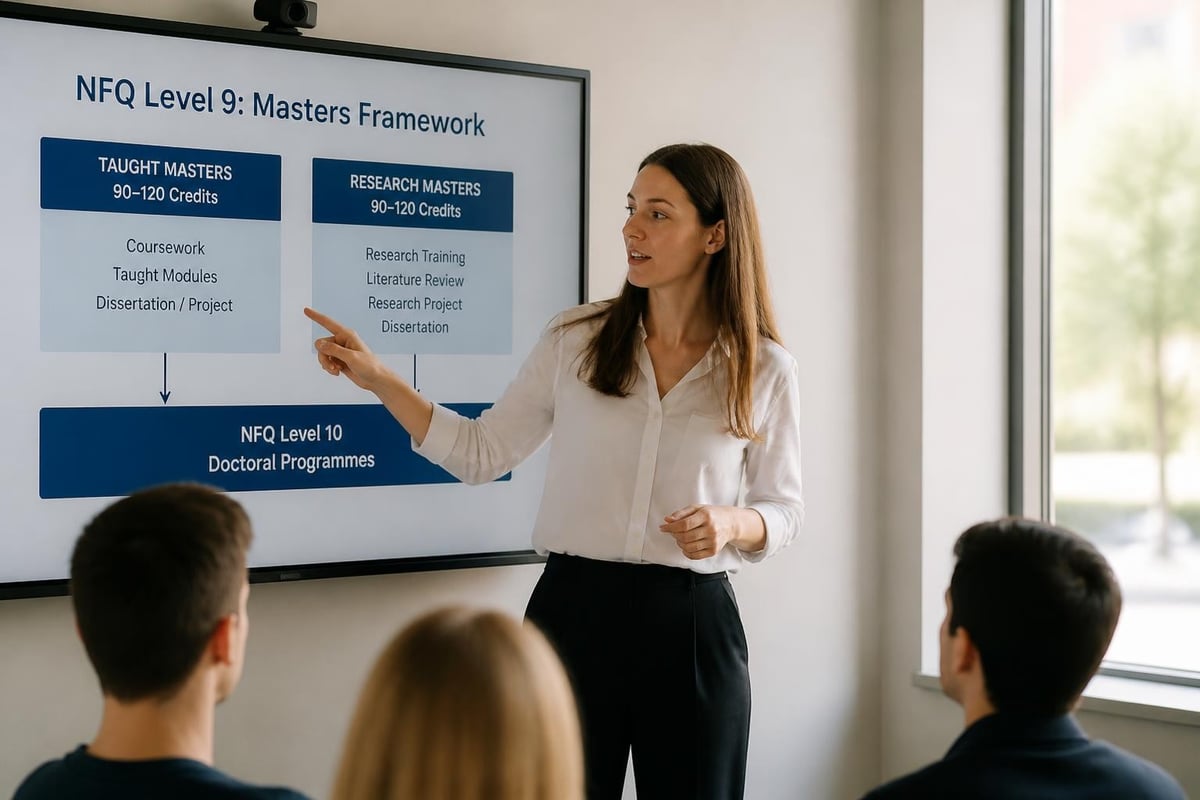
The Irish education system organizes qualifications through the National Framework of Qualifications, with masters degrees positioned at Level 9. This structure ensures consistency and international recognition for masters from Ireland programs.
NFQ Level 9 Structure and Types
Irish masters programs fall into two primary categories: taught masters and research masters. Taught programs typically require coursework, examinations, and a dissertation or major project, spanning one to two years of full-time study. Research masters emphasize original investigation under expert supervision, culminating in a substantial thesis.
Key characteristics of Irish masters programs:
- Duration: 12-24 months for taught programs, 18-24 months for research degrees
- Credits: Typically 90-120 ECTS credits (European Credit Transfer System)
- Assessment: Combination of coursework, examinations, and research components
- Structure: Modular design allowing specialization and flexibility
The distinction between program types matters significantly for career trajectories and further academic pursuits. Research masters serve as excellent preparation for doctoral studies, while taught programs often emphasize professional skills and industry applications.
Popular Fields of Study
Masters from Ireland span virtually every academic discipline, with particular strength in several areas. Business and management programs, including MBA offerings, consistently rank among the most popular choices. Technology and computer science masters attract significant international enrollment, supported by Ireland's thriving tech sector.
| Field | Typical Duration | Common Specializations |
|---|---|---|
| Business Administration | 12-18 months | Finance, Marketing, Strategy, Innovation |
| Computer Science | 12-24 months | AI, Cybersecurity, Data Analytics, Software Engineering |
| Law (LLM) | 12 months | International Law, Human Rights, Corporate Law |
| Engineering | 12-24 months | Biomedical, Civil, Electrical, Mechanical |
| Sciences | 12-24 months | Biotechnology, Environmental Science, Chemistry |
| Humanities | 12-24 months | History, Literature, Cultural Studies, Theology |
Professional programs in law (LLM), healthcare, and education also maintain strong reputations. Recent trends show growing demand for interdisciplinary masters combining technology with traditional fields.
Entry Requirements and Application Process
Securing admission to masters from Ireland programs requires careful preparation and understanding of institutional expectations. Irish universities maintain high academic standards while seeking diverse, talented cohorts.
Academic Prerequisites
Most programs require a Level 8 honors bachelor's degree (Irish equivalent) or international equivalent with at least upper second-class honors (2:1). Some competitive programs demand first-class honors or specific prerequisite coursework.
- Verify degree equivalency through institutional admissions offices or credential evaluation services
- Review subject-specific requirements as some programs require relevant undergraduate backgrounds
- Check grade point average expectations (typically 3.0-3.5 on 4.0 scale for international students)
- Prepare academic transcripts with official translations if needed
- Secure strong academic references from professors familiar with your work
International qualifications undergo evaluation to ensure comparability with Irish standards. The Higher Education Authority provides statistical data showing enrollment patterns and institutional profiles, helping prospective students understand program competitiveness.
Language Proficiency Standards
Non-native English speakers must demonstrate language competency through standardized testing. Common requirements include:
- IELTS Academic: Minimum 6.5 overall, with no band below 6.0
- TOEFL iBT: Minimum 88-90, with sectional minimums
- Cambridge English: C1 Advanced or C2 Proficiency
- PTE Academic: Minimum 61-63 overall
Some programs, particularly in law, business, or humanities, may require higher scores. Exemptions typically apply for applicants who completed prior degrees entirely in English at recognized institutions.
Funding Your Masters Education in Ireland
Financial planning represents a critical component of pursuing masters from Ireland. Multiple funding sources exist, though competition remains intense for most scholarships and grants.
Tuition Fee Structures
Fee levels vary significantly between EU/EEA students and non-EU international students. For 2026, typical ranges include:
EU/EEA Students:
- Taught masters: €4,000-€8,000 per year
- Research masters: €4,000-€7,000 per year
Non-EU International Students:
- Taught masters: €9,000-€35,000 per year
- Research masters: €10,000-€18,000 per year
Premium programs in business, medicine, or specialized fields command higher fees. EU students may qualify for the "free fees" initiative in limited circumstances, though this primarily applies to undergraduate study.
Scholarship and Grant Opportunities
SUSI provides approved postgraduate courses and institutions eligible for state funding, primarily benefiting Irish and EU students meeting residency requirements. The postgraduate grant offers up to €6,270 annually for eligible candidates.
Major scholarship programs for international students:
- Government of Ireland International Education Scholarships
- Irish Aid Fellowships for developing countries
- Institutional merit scholarships (university-specific)
- Research council funding for research masters and PhD pathways
- Corporate and industry-sponsored programs
The Irish Universities Association offers guidance on international student supports, including scholarship databases and application timelines. Many universities also provide partial tuition waivers or stipends for exceptional candidates.
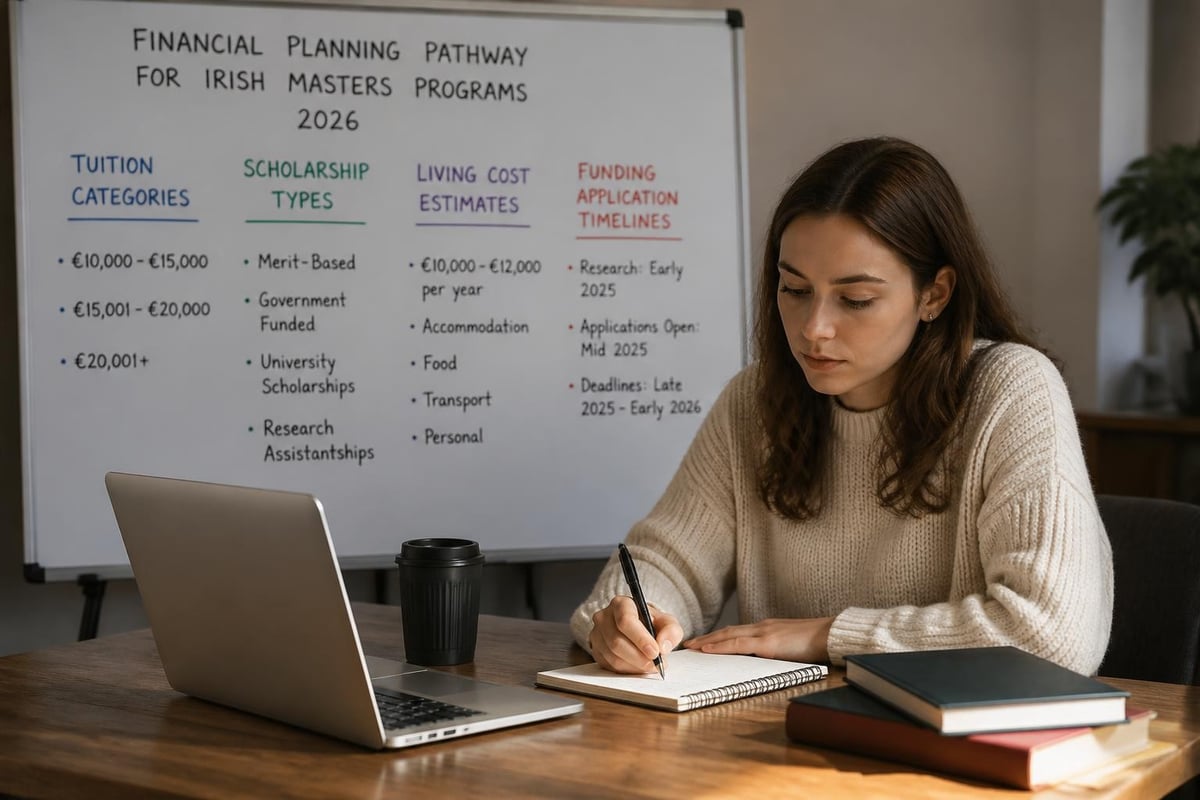
Additional funding considerations include living costs, typically €10,000-€15,000 annually depending on location. Dublin costs exceed regional cities like Cork, Galway, or Limerick. Part-time work permissions allow international students to work 20 hours weekly during term time.
Immigration Considerations for International Students
Non-EEA students pursuing masters from Ireland must navigate specific immigration requirements and benefit from favorable post-study provisions. Understanding these regulations early facilitates smooth transitions.
Student Permission Requirements
The Irish Immigration Service provides comprehensive guidance on student permissions, including application processes and conditions. Initial entry requires acceptance onto a recognized program listed on the Interim List of Eligible Programmes (ILEP).
Student permission conditions include:
- Full-time enrollment in an eligible masters program
- Proof of academic progression
- Private medical insurance coverage
- Evidence of financial self-sufficiency (€10,000 minimum)
- Attendance and engagement requirements
Students receive Stamp 2 permission, renewable annually based on continued enrollment and satisfactory academic progress. Immigration officers may verify compliance through attendance records and institutional reports.
Third Level Graduate Programme
One significant advantage of completing masters from Ireland involves access to the Third Level Graduate Programme, allowing qualified graduates to remain for employment or entrepreneurship. The ICOS Third Level Graduate Scheme guidance explains eligibility and application procedures.
| Qualification Level | Stay-Back Duration | Permission Type |
|---|---|---|
| Level 9 Masters | 24 months | Stamp 1G |
| Level 10 Doctorate | 24 months | Stamp 1G |
| Level 8 Honours Bachelor | 12 months | Stamp 1G |
Stamp 1G permission allows full-time work without restriction, providing valuable professional experience in the Irish or European market. Graduates may transition to employment permits, critical skills permits, or other long-term immigration pathways based on career progression.
Career Outcomes and Graduate Success
Investment in masters from Ireland typically yields strong returns through enhanced employment prospects and earning potential. Recent graduate outcome data demonstrates the value proposition of Irish postgraduate education.
Employment and Salary Trends
The HEA Graduate Outcomes Survey provides comprehensive data on employment rates, salary ranges, and career trajectories for Irish graduates. Masters graduates consistently outperform bachelor's degree holders across multiple metrics.
2024-2025 Masters Graduate Outcomes:
- Employment rate within 9 months: 88-92%
- Median starting salary (Irish graduates): €38,000-€42,000
- Median starting salary (international graduates remaining in Ireland): €35,000-€40,000
- Further study progression: 8-12%
- Unemployment rate: 3-5%
Sector-specific variations exist, with technology, finance, and pharmaceutical industries offering premium compensation. International graduates benefit from Ireland's multinational presence, including major European headquarters for global corporations.
Skills Development and Professional Growth
Masters from Ireland emphasize transferable skills alongside discipline-specific expertise. Programs integrate critical thinking, research methodology, project management, and communication competencies essential for senior professional roles.
Employers particularly value:
- Advanced analytical and problem-solving capabilities
- Research design and data interpretation skills
- Cross-cultural collaboration experience
- Ethical reasoning and professional judgment
- Innovation and entrepreneurial mindsets
Industry partnerships, internship opportunities, and capstone projects provide practical application of theoretical knowledge. Many programs incorporate professional placements, allowing students to build Irish networks and gain sector-specific experience.

Choosing the Right Program and Institution
Selecting appropriate masters from Ireland requires thorough research and self-assessment. The Irish higher education landscape includes universities, technological universities, and specialized institutions, each offering distinct advantages.
Using National Resources
Qualifax serves as the national course database, enabling comprehensive program searches by field, institution, location, and delivery mode. The platform provides detailed course descriptions, entry requirements, and application deadlines.
Search criteria to consider:
- Program content and structure – Review module descriptions, specialization options, and learning outcomes
- Faculty expertise – Investigate research profiles and industry connections of academic staff
- Delivery format – Assess full-time, part-time, blended, or online options
- Accreditation – Verify professional body recognition for career-specific programs
- Institutional reputation – Consider rankings, research output, and graduate satisfaction
Students should attend virtual open days, connect with current students or alumni, and review recent trends in graduation numbers to understand program popularity and completion rates.
Alignment with Career Goals
Strategic program selection considers both immediate learning objectives and long-term career aspirations. Students targeting specific industries should prioritize programs with relevant accreditations, industry advisory boards, and placement partnerships.
For those considering postgraduate degree pathways beyond masters level, research-intensive programs build essential skills for doctoral study. Alternatively, professionally-oriented masters provide direct routes into specialized careers.
The European Commission’s Education Monitor for Ireland contextualizes Irish postgraduate education within broader European trends, highlighting Ireland's strengths in internationalization, research quality, and graduate employability.
Living and Studying in Ireland
The student experience extends beyond academics to encompass cultural immersion, community engagement, and personal development. Ireland offers welcoming environments for international students pursuing masters from Ireland.
Campus Life and Student Services
Irish institutions provide comprehensive support services addressing academic, personal, and professional needs. International student offices assist with immigration matters, cultural adjustment, and integration activities.
Available student supports:
- Academic skills workshops and writing centers
- Career counseling and job placement services
- Mental health and wellbeing programs
- Student clubs, societies, and sports facilities
- Library resources and research support
- Housing assistance and accommodation services
Most universities maintain active postgraduate student associations, facilitating peer networking and advocacy. These organizations often coordinate social events, professional development seminars, and academic conferences.
Cultural and Social Integration
Ireland's compact size and excellent transportation infrastructure enable easy exploration. Students can experience vibrant urban centers alongside stunning natural landscapes, from coastal cliffs to ancient historical sites.
The Irish higher education sector emphasizes internationalization, with diverse student populations creating multicultural learning environments. English-language instruction facilitates communication, while Irish cultural traditions offer unique enrichment opportunities.
Cities hosting major universities – Dublin, Cork, Galway, Limerick, and others – provide varied cultural programming, dining options, and entertainment suitable for diverse preferences and budgets. Student discounts and university-organized activities enhance affordability and accessibility.
Research Excellence and Innovation
Masters from Ireland benefit from the country's substantial investment in research infrastructure and innovation ecosystems. Ireland consistently ranks highly in European research output quality and impact metrics.
Research Funding and Facilities
Major funding bodies including Science Foundation Ireland, Irish Research Council, and Health Research Board support postgraduate research across disciplines. These organizations provide competitive fellowships, equipment grants, and collaborative project funding.
Research masters students gain access to:
- State-of-the-art laboratories and computational resources
- Specialized libraries and digital archives
- Industry partnership programs and commercialization support
- International research networks and mobility schemes
- Interdisciplinary research centers and institutes
Institutional research strategies align with national priorities in areas like sustainability, digital transformation, health innovation, and social inclusion, creating opportunities for impactful postgraduate research.
Collaboration and Knowledge Exchange
Irish universities maintain extensive partnerships with European and global institutions, facilitating student exchanges, joint degrees, and collaborative research projects. Masters students may access Erasmus+ mobility funding for study periods or research placements abroad.
Industry collaboration represents another strength, with many programs incorporating enterprise engagement through:
- Industry-sponsored research projects
- Guest lectures from sector professionals
- Site visits and workplace learning
- Innovation challenges and hackathons
- Technology transfer and startup incubation
These connections enhance employability while contributing to knowledge transfer between academia and practice. Students pursuing advanced PhD pathways particularly benefit from these research networks and collaborative frameworks.
Practical Application Process
Successfully applying for masters from Ireland requires organization, attention to detail, and strategic timing. Understanding application cycles and requirements prevents common pitfalls.
Application Timeline
Most programs operate on annual cycles with autumn (September/October) start dates. Some institutions offer January/February intake for selected programs. Application deadlines vary:
- EU/EEA applicants: Typically late spring (April-June) for autumn entry
- Non-EU international applicants: Often earlier deadlines (January-March) to allow visa processing
- Competitive programs: May close earlier once places fill
- Research masters: Often accept applications year-round with supervisor agreement
Early application provides advantages including better scholarship consideration, accommodation availability, and immigration processing time.
Required Documentation
Standard application packages include:
| Document Type | Purpose | Notes |
|---|---|---|
| Academic transcripts | Verify qualifications | Official copies, translated if needed |
| Degree certificates | Confirm completion | Provisional acceptable pending final results |
| Personal statement | Demonstrate motivation and fit | 500-1000 words, program-specific |
| References (2-3) | Assess academic potential | Preferably from academic sources |
| CV/Resume | Show relevant experience | Highlight research, work, achievements |
| Language test scores | Prove English proficiency | Valid within 2 years typically |
| Research proposal | For research programs | 1000-2000 words outlining project |
| Portfolio/samples | For creative programs | Field-specific requirements |
Digital submission through institutional portals has become standard, though some programs may request additional hard copies. Application fees typically range €35-€75 per program.
Pursuing masters from Ireland offers exceptional academic quality, valuable international experience, and strong career prospects within a welcoming, English-speaking European environment. The combination of rigorous programs, research opportunities, favorable immigration policies, and vibrant cultural experiences makes Ireland an increasingly attractive postgraduate destination for students worldwide. Whether you're considering advanced study beyond your current qualifications or seeking specialized expertise in business, law, theology, or other fields, University Of Gold Coast provides comprehensive academic programs and extensive support resources to help you achieve your educational and professional goals through quality postgraduate education.