
The role of a vice chancellor represents one of the most influential positions in higher education, serving as the chief executive officer and academic leader of a university. This senior leadership position carries significant responsibility for institutional strategy, academic quality, financial sustainability, and stakeholder engagement. Understanding the vice chancellor's multifaceted role is essential for anyone involved in university governance, aspiring academic leaders, and students who benefit from effective institutional leadership.
The Vice Chancellor Position: Definition and Core Responsibilities
A vice chancellor serves as the principal academic and administrative officer of a university, reporting directly to the governing board or council. This executive role combines strategic leadership, academic stewardship, and operational management in a complex educational environment.
Primary Duties of University Leadership
The vice chancellor oversees all aspects of university operations, from academic program development to financial planning. Key responsibilities include:
- Setting the institutional vision and strategic direction
- Ensuring academic quality and standards across all programs
- Managing university finances and resource allocation
- Representing the institution to external stakeholders
- Leading faculty recruitment and development initiatives
- Overseeing student experience and outcomes
Academic governance forms a central component of the vice chancellor's work. This includes chairing academic boards, approving new programs, and maintaining institutional accreditation. The Office for Students guidance on management and governance outlines regulatory expectations for senior leaders in maintaining transparent and effective oversight.

Beyond internal operations, the vice chancellor acts as the public face of the university. This involves fundraising, community engagement, government relations, and partnership development with industry and other educational institutions.
| Responsibility Area | Key Activities | Stakeholders Involved |
|---|---|---|
| Academic Leadership | Curriculum approval, quality assurance, research strategy | Faculty, academic boards, accreditors |
| Financial Management | Budget planning, resource allocation, revenue generation | Finance team, board, investors |
| External Relations | Fundraising, partnerships, government liaison | Donors, partners, regulators |
| Student Affairs | Experience enhancement, support services, outcomes | Students, student organizations, parents |
Qualifications and Career Path to Vice Chancellor
The journey to becoming a vice chancellor typically requires extensive academic credentials combined with progressive leadership experience. Most vice chancellors hold doctoral degrees and distinguished records in teaching, research, or both.
Educational Background and Experience
A typical vice chancellor profile includes:
- Doctoral degree (PhD or professional doctorate) in their field
- Substantial publication record demonstrating scholarly achievement
- Progressive academic leadership roles such as department chair, dean, or provost
- Strategic management experience in complex organizations
- Proven track record in fundraising and stakeholder engagement
The path usually begins with faculty positions, advancing through departmental leadership to college-level administration. Many vice chancellors serve as deputy vice chancellors or provosts before assuming the top role. The HEPI policy report on vice-chancellor recruitment reveals important trends in tenure, diversity, and career trajectories among UK university leaders.
Essential Skills and Competencies
Modern vice chancellors must balance traditional academic values with contemporary management demands. Critical competencies include:
- Strategic thinking and long-term planning
- Financial acumen and resource management
- Change leadership and innovation
- Communication and public speaking
- Stakeholder relationship building
- Crisis management and problem-solving
Digital literacy has become increasingly important as universities navigate technological transformation. Research on university leadership and educational technology innovation highlights how vice chancellors foster trust and lead digital change initiatives effectively.
Vice Chancellor Versus Other University Leadership Roles
Understanding the distinction between various senior leadership positions helps clarify the vice chancellor's unique function within institutional hierarchy.
Comparative Leadership Structure
| Position | Primary Focus | Reporting Structure |
|---|---|---|
| Vice Chancellor | Overall institutional leadership, strategy | Governing board/council |
| Deputy Vice Chancellor | Specific portfolios (research, international, academic) | Vice Chancellor |
| Provost | Academic affairs, faculty development | Vice Chancellor |
| Registrar | Academic administration, student records | Vice Chancellor or Provost |
| Chief Financial Officer | Financial management, budgeting | Vice Chancellor |
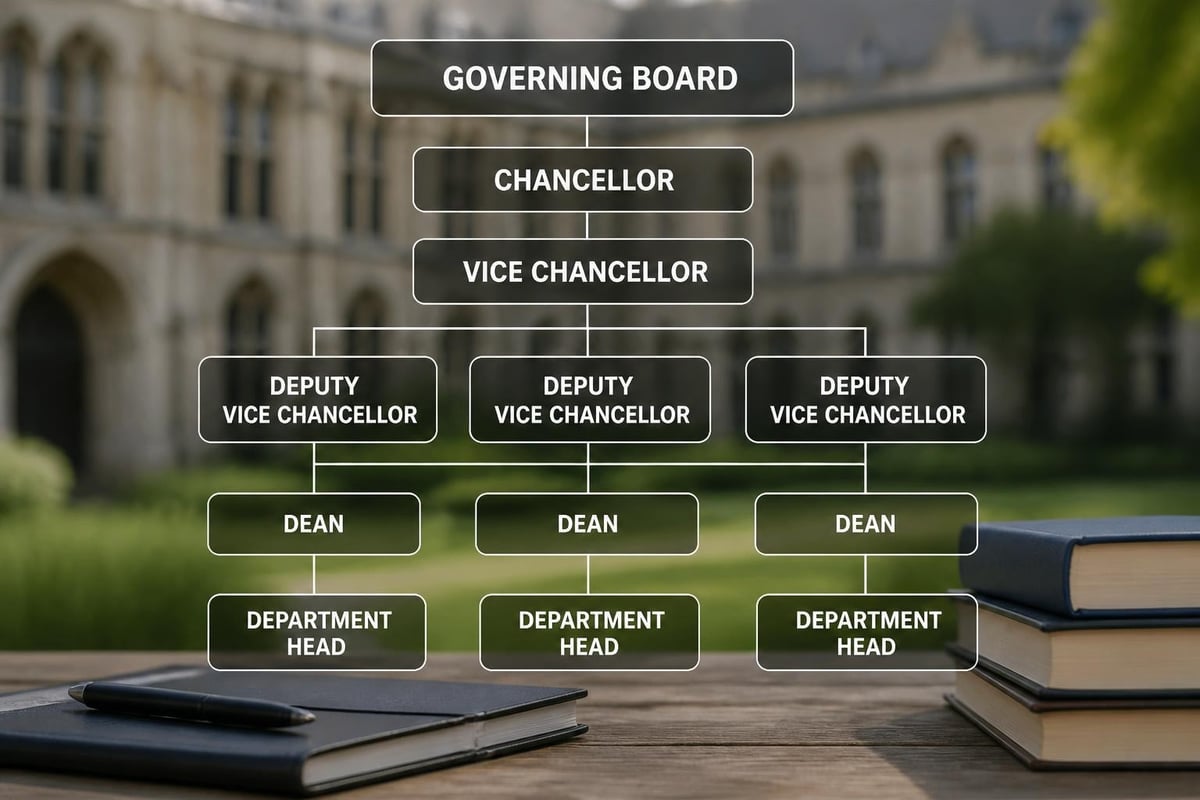
In some countries, particularly the United States, the term "president" or "chancellor" is used instead of vice chancellor. The title "vice chancellor" is most common in Commonwealth countries, where the "chancellor" is often a ceremonial figurehead.
The deputy vice chancellor positions typically focus on specific strategic areas such as research, international partnerships, or student experience. These roles support the vice chancellor while developing future leadership talent.
Strategic Leadership in Higher Education
The vice chancellor's strategic role has evolved significantly in response to changing educational landscapes, funding models, and student expectations. Modern leaders must navigate complex challenges while maintaining academic integrity.
Key Strategic Priorities
Contemporary vice chancellors focus on several critical areas:
- Academic Excellence: Ensuring program quality, research output, and teaching effectiveness
- Financial Sustainability: Diversifying revenue streams beyond traditional tuition
- Digital Transformation: Integrating technology into teaching, research, and operations
- Internationalization: Building global partnerships and attracting international students
- Community Engagement: Strengthening ties with local communities and industry partners
Enrollment management requires vice chancellors to balance access, diversity, and financial sustainability. This includes setting admissions standards, scholarship strategies, and retention initiatives.
The University of Gold Coast exemplifies comprehensive academic programming under vice chancellor leadership, offering advanced degrees including PhD, MBA, MSc, and LLM programs alongside professional diplomas across business, law, and theology.
Innovation and Change Management
Leading innovation while respecting academic tradition presents a constant challenge. Vice chancellors must:
- Champion new teaching methodologies and learning technologies
- Support interdisciplinary research initiatives
- Modernize administrative processes and systems
- Foster entrepreneurial culture among faculty and students
- Balance innovation with financial prudence
Successful change leadership requires building consensus among diverse stakeholders with varying interests and perspectives.
Accountability and Governance Challenges
The vice chancellor operates within a framework of multiple accountability relationships, balancing autonomy with oversight.
Stakeholder Accountability
Vice chancellors answer to numerous constituencies:
- Governing boards provide oversight and approve major decisions
- Faculty expect academic freedom and collegial governance
- Students demand quality education and support services
- Government regulators enforce compliance and standards
- Donors and alumni seek institutional advancement and stewardship
- General public increasingly scrutinizes higher education value
This multi-directional accountability creates tension when stakeholder interests conflict. For example, tuition increases that improve financial stability may upset students and families.
Recent debates about vice-chancellor pay and accountability highlight growing public interest in senior leadership compensation and decision-making transparency.
Transparency and Ethical Leadership
Modern vice chancellors face heightened expectations for transparency in:
- Executive compensation and benefits
- Financial decision-making and resource allocation
- Enrollment data and student outcomes
- Research integrity and conflicts of interest
- Diversity, equity, and inclusion initiatives
Ethical leadership requires vice chancellors to model institutional values, maintain integrity under pressure, and prioritize mission over personal interest.
Compensation and Contract Structures
Vice chancellor compensation reflects the position's scope, institutional size, geographic location, and market conditions. Understanding typical compensation structures provides context for this senior role.
Salary Components and Benefits
| Compensation Element | Typical Range/Structure |
|---|---|
| Base Salary | $250,000 – $800,000+ annually (varies by institution size) |
| Performance Bonuses | 10-30% of base salary |
| Housing/Living Allowance | University residence or housing stipend |
| Retirement Contributions | Enhanced pension or retirement matching |
| Additional Benefits | Car allowance, professional development, expense accounts |
Larger, research-intensive universities typically offer higher compensation than smaller teaching-focused institutions. Geographic cost of living also influences salary levels.
Contract Terms and Evaluation
Vice chancellor contracts typically span three to five years with renewal options. Performance evaluation criteria include:
- Enrollment trends and student success metrics
- Financial performance and fundraising results
- Academic reputation and rankings
- Faculty and staff satisfaction
- Strategic plan progress
- Stakeholder engagement outcomes
Performance reviews usually involve governing board assessment committees, with input from various stakeholder groups.
Challenges Facing Modern Vice Chancellors
The higher education landscape presents unprecedented challenges requiring adaptive leadership and innovative solutions.
Financial Pressures and Sustainability
Many universities face financial headwinds including:
- Declining traditional student populations in some markets
- Rising operational costs exceeding revenue growth
- Reduced government funding in many jurisdictions
- Increased price sensitivity among students and families
- Competition from alternative education providers
Vice chancellors must develop sustainable business models while maintaining academic quality and accessibility.
Technology Disruption and Digital Strategy
Digital transformation affects every aspect of university operations:
- Online and hybrid learning delivery models
- AI and automation in teaching and administration
- Cybersecurity and data privacy concerns
- Digital credential and micro-credential offerings
- Virtual research collaboration and data management

Leading digital change requires significant investment in infrastructure, training, and cultural transformation.
Diversity, Equity, and Inclusion
Vice chancellors bear ultimate responsibility for fostering inclusive campus environments. Key initiatives include:
- Diversifying faculty, staff, and student populations
- Closing achievement gaps among student groups
- Creating inclusive curricula and pedagogy
- Addressing campus climate issues
- Ensuring equitable access to resources and opportunities
Progress requires sustained commitment, resource allocation, and accountability mechanisms.
Global Perspectives on Vice Chancellor Roles
The vice chancellor position varies across international contexts, reflecting different educational traditions, governance models, and regulatory frameworks.
Regional Variations
In the United Kingdom and Commonwealth countries, vice chancellors serve as chief executives while chancellors hold ceremonial roles. Universities maintain significant autonomy within regulatory frameworks.
Continental European models often feature collegial governance with rectors elected by faculty serving shorter terms. Professional management teams support academic leadership.
Asian universities increasingly adopt corporate governance models with professionally recruited vice chancellors focused on international competitiveness and research excellence.
These variations demonstrate different approaches to balancing academic tradition, professional management, and institutional accountability.
Succession Planning and Leadership Development
Effective universities prepare for leadership transitions through deliberate succession planning and talent development.
Building Leadership Pipelines
Vice chancellors should cultivate future leaders by:
- Identifying high-potential faculty and administrators early
- Providing progressive leadership opportunities
- Supporting professional development and external learning
- Creating mentorship relationships
- Encouraging cross-functional experience
Succession planning reduces transition risks and ensures leadership continuity aligned with institutional culture and values.
Recruitment and Selection Processes
Vice chancellor searches typically involve:
- Governing board search committees
- External search firm engagement
- Broad stakeholder consultation
- Rigorous candidate assessment
- Background verification and reference checking
The process balances internal knowledge with external fresh perspectives, seeking leaders who fit institutional needs and culture.
Impact on Student Experience and Outcomes
While vice chancellors may seem distant from daily student life, their decisions profoundly affect educational quality, support services, and student success.
Student-Centered Leadership
Effective vice chancellors prioritize:
- Academic program quality ensuring relevant, rigorous curricula
- Support services providing advising, counseling, and career development
- Campus facilities maintaining safe, modern learning environments
- Co-curricular opportunities enabling leadership development and engagement
- Affordability initiatives managing costs and expanding financial aid
Student outcomes including retention, graduation rates, career placement, and alumni success reflect leadership effectiveness.
Engagement and Communication
Progressive vice chancellors actively engage students through:
- Regular town halls and listening sessions
- Student government collaboration
- Social media presence and accessibility
- Campus event participation
- Responsive feedback mechanisms
Direct engagement helps leaders understand student perspectives and build trust across the campus community.
The vice chancellor position represents the pinnacle of university leadership, requiring exceptional academic credentials, strategic vision, and stakeholder management skills to navigate complex challenges in modern higher education. Whether you're pursuing advanced academic credentials to prepare for leadership roles or seeking an institution with strong governance and student-centered priorities, University Of Gold Coast delivers comprehensive programs from PhD to professional diplomas across business, law, and theology, supported by dedicated leadership committed to academic excellence and student success.