
The landscape of higher education is experiencing a fundamental transformation. As we navigate through 2026, a new model is emerging that challenges traditional academic structures and responds to the evolving needs of learners, employers, and society. Post universities represent a shift from conventional degree-focused institutions to dynamic learning ecosystems that prioritize skills, flexibility, and lifelong development. This evolution reflects changing workforce demands, technological advancement, and the recognition that education must extend beyond the four-year undergraduate experience.
Understanding the Post University Model
Post universities operate on principles that fundamentally differ from traditional academic institutions. Rather than organizing education around fixed degree programs and semester schedules, these innovative models focus on competency-based learning, modular credentials, and continuous skill development. The post university framework emphasizes what learners can do with their knowledge rather than simply what they know.
The distinguishing characteristics of post universities include several key elements:
- Modular learning pathways that allow students to build customized educational experiences
- Recognition of prior learning and professional experience toward credentials
- Integration of industry partnerships to ensure curriculum relevance
- Flexible scheduling that accommodates working professionals
- Digital-first delivery with optional in-person experiences
- Micro-credentials and stackable certificates alongside traditional degrees
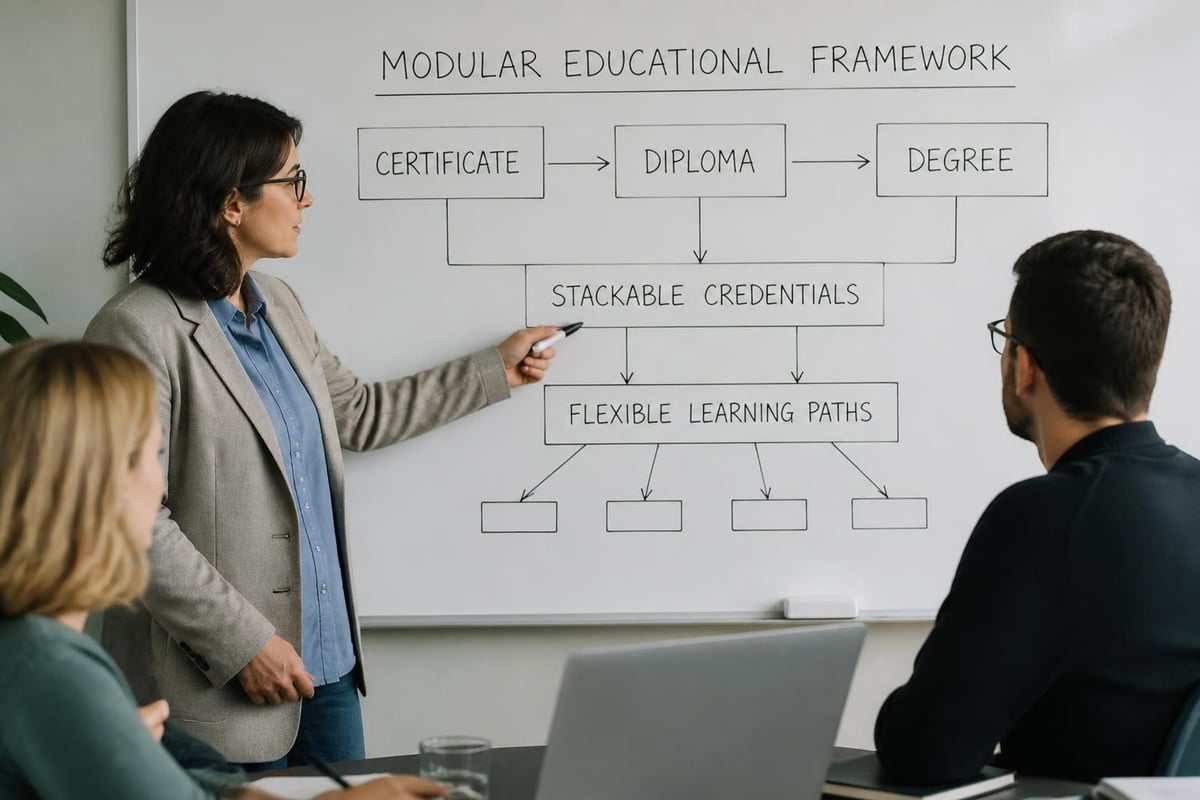
This model addresses a critical gap in traditional education: the assumption that learning occurs primarily between ages 18 and 22. Post universities acknowledge that professional development continues throughout a career, requiring institutions to serve learners across multiple life stages.
The Technology Infrastructure Behind Post Universities
Technology serves as the backbone of post universities, enabling flexibility and personalization at scale. Advanced learning management systems track individual progress across multiple credentials, while artificial intelligence personalizes learning pathways based on career goals and existing competencies.
| Technology Component | Function | Benefit |
|---|---|---|
| Adaptive Learning Platforms | Customize content delivery based on learner performance | Improved retention and completion rates |
| Digital Credentialing Systems | Issue verifiable certificates and badges | Enhanced credential portability and verification |
| Competency Mapping Tools | Align learning outcomes with industry requirements | Greater career relevance |
| Analytics Dashboards | Track progress across multiple learning pathways | Data-driven educational decisions |
The University Of Gold Coast exemplifies how institutions can leverage technology to support diverse academic programs while maintaining academic rigor. Their online libraries and student portals provide the digital infrastructure necessary for flexible learning delivery.
Workforce Integration and Career-Focused Learning
Post universities blur the traditional boundaries between education and employment. Unlike conventional institutions that separate academic study from professional practice, this model integrates work experience, industry projects, and skill application throughout the learning journey.
Employer partnerships form the cornerstone of post university success. These collaborations ensure curriculum remains aligned with actual market needs rather than theoretical academic frameworks. Companies participate in curriculum design, provide real-world case studies, and often employ students while they complete their credentials.
The benefits of this workforce-integrated approach extend to multiple stakeholders:
- Students gain relevant skills with immediate career application
- Employers access a talent pipeline trained in current methodologies
- Institutions maintain curriculum relevance without extensive lag time
- Industries influence educational standards to meet emerging needs
This integration proves particularly valuable for advanced degrees like MBA and MSc programs, where professional experience enhances academic learning. Post universities recognize that working professionals pursuing higher education bring valuable context that enriches their studies.
Credential Diversity and Stackable Qualifications
The post university model moves beyond the binary of "degree" or "no degree" to embrace a spectrum of credentials. Professional diplomas, certificates, micro-credentials, and traditional degrees coexist within integrated frameworks where learners can progress according to their goals and circumstances.
Stackable credentials allow learners to accumulate verified competencies over time. A professional might begin with a specialized certificate, stack additional credentials to form a diploma, and eventually complete a full master's degree-all while working full-time. Each credential holds independent value while contributing toward larger qualifications.

This flexibility particularly benefits professionals in fields requiring continuous upskilling, such as business, law, and theology. The academic programs offered by forward-thinking institutions demonstrate how diverse credentials can serve different learner populations while maintaining academic standards.
Global Access and Borderless Education
Post universities operate without traditional geographic constraints. Digital delivery enables students to access world-class education regardless of physical location, democratizing opportunities previously limited to those who could relocate or commute to campus.
This global reach creates several advantages:
- Diverse cohorts bring multiple perspectives to collaborative learning
- 24/7 resource access accommodates different time zones and schedules
- Reduced costs eliminate housing and relocation expenses
- Cultural exchange occurs naturally within international student groups
However, borderless education also presents challenges. Institutions must navigate varying regulatory environments, accreditation standards, and quality assurance frameworks across jurisdictions. Post universities address these complexities through international partnerships, mutual recognition agreements, and transparent competency frameworks that transcend geographic boundaries.
Assessment Innovation in Post Universities
Traditional assessment methods-timed exams, term papers, and standardized tests-often measure memorization rather than applied competency. Post universities pioneer alternative assessment approaches that evaluate real-world skill application.
Performance-based assessments require students to demonstrate competencies through authentic tasks that mirror professional scenarios. A business student might develop an actual marketing strategy for a real company, while a law student could draft contracts addressing current regulatory challenges.
| Assessment Type | Traditional Model | Post University Model |
|---|---|---|
| Primary Focus | Knowledge recall | Competency demonstration |
| Format | Standardized exams | Project-based portfolios |
| Timeline | Fixed dates | Competency-based progression |
| Context | Academic scenarios | Professional applications |
| Feedback | Letter grades | Detailed competency rubrics |
Portfolio assessment allows learners to compile evidence of their competencies across multiple contexts, including prior professional work, projects completed during study, and continuous skill development. This approach provides employers with concrete evidence of capabilities beyond transcripts and grade point averages.
Lifelong Learning Infrastructure
The post university concept recognizes that education no longer concludes with degree completion. Professional development continues throughout careers, requiring institutions to maintain relationships with graduates and support continuous learning.
Alumni engagement transforms from fundraising to learning partnerships. Post universities offer returning education pathways where graduates can update skills, earn new credentials, and access emerging knowledge in their fields. This creates sustainable revenue models while serving genuine market needs.

The infrastructure supporting lifelong learning includes:
- Alumni access to digital libraries and research databases
- Discounted pathways for returning learners
- Credit for professional development toward new credentials
- Networking opportunities across cohorts and graduation years
- Advisory roles where experienced professionals guide current students
Professional fields such as theology, business administration, and legal studies particularly benefit from this approach, as practitioners must continually update their knowledge to remain effective.
Quality Assurance in Decentralized Models
Critics of post universities often question whether flexible, distributed models can maintain academic rigor. However, competency-based frameworks potentially offer more robust quality assurance than traditional seat-time requirements.
Clear competency standards define exactly what learners must demonstrate, regardless of how or where they acquired their knowledge. Assessment becomes criterion-referenced rather than norm-referenced, focusing on whether students meet defined standards rather than how they compare to peers.
Accreditation bodies are adapting to evaluate post universities based on learning outcomes rather than input measures like faculty credentials or library holdings. This shift recognizes that quality education can occur through diverse delivery models when robust outcome assessment exists.
Economic Sustainability and Business Models
Post universities require different financial models than traditional institutions. Without the residential campus infrastructure that drives significant costs, these institutions can operate more efficiently. However, they must develop sustainable revenue streams that support quality programming.
Several business models have emerged:
- Subscription-based access to learning resources and credentials
- Competency-based tuition charged per skill mastered rather than credit hour
- Corporate partnerships where employers sponsor employee education
- Freemium models offering basic content freely with premium credentials
- Outcome-based financing where payment relates to career advancement
The economic efficiency of post universities makes advanced education more accessible. Programs like MBA, MSc, and professional diplomas become attainable for professionals who cannot afford traditional programs or leave employment for full-time study.
Social Equity and Access Expansion
Post universities have the potential to address persistent equity gaps in higher education. By removing barriers related to location, fixed schedules, and residential requirements, these models serve populations traditionally underserved by conventional institutions.
Working adults, parents with childcare responsibilities, rural residents, and individuals with disabilities all benefit from flexible learning options. Recognition of prior learning values the knowledge professionals have gained through experience, making credentials more attainable for those who followed non-traditional paths.
However, equity concerns remain. Digital access requirements may exclude those without reliable internet connectivity. The self-directed nature of flexible learning may disadvantage students who lack strong academic preparation or support systems. Post universities must actively address these challenges through support services, technology access programs, and structured guidance.
Integration with Traditional Institutions
The future of higher education likely involves hybrid models rather than complete replacement of traditional universities. Many established institutions are adopting post university principles within their existing structures, creating dual pathways that serve both traditional students and working professionals.
This integration allows institutions to maintain their residential undergraduate programs while expanding access through flexible graduate and professional development offerings. The diverse program offerings at innovative institutions demonstrate how traditional credentials like PhD programs can coexist with flexible professional diplomas.
The most successful institutions will likely be those that embrace both models, recognizing that different learners have different needs. An 18-year-old undergraduate benefits from the immersive campus experience, while a mid-career professional needs flexible options that accommodate work and family responsibilities.
Regulatory and Accreditation Challenges
Post universities navigate complex regulatory environments developed for traditional institutions. Accreditation standards based on faculty credentials, library collections, and campus facilities don't always align with distributed, competency-based models.
Progressive accreditors are developing new frameworks that evaluate:
- Learning outcomes rather than input measures
- Competency validation methods and rigor
- Student support quality across delivery modes
- Employer satisfaction with graduate preparedness
- Innovation in assessment and credential design
These evolving standards recognize that quality education can occur through multiple models. However, regulatory inconsistency across jurisdictions creates challenges for institutions operating globally or across state lines.
The path forward requires collaboration between post universities, traditional institutions, employers, and regulatory bodies to develop standards that protect quality while enabling innovation.
Post universities represent an evolution in higher education that addresses changing workforce needs, technological capabilities, and learner expectations in 2026. By embracing flexibility, competency-based learning, and lifelong development, these models make education more accessible and relevant. Whether you're considering advanced study like an MBA or MSc, seeking professional diplomas to advance your career, or pursuing a PhD to deepen expertise, University Of Gold Coast offers the academic rigor and flexible pathways that prepare you for success in an evolving professional landscape.