
The demand for accelerated graduate education has surged as professionals seek to advance their careers without extended interruptions. An online masters one year program offers the perfect solution for working adults who need flexibility without sacrificing academic rigor. These programs deliver comprehensive graduate-level education in a condensed timeframe, allowing students to earn advanced credentials while maintaining their professional and personal commitments. Understanding the structure, requirements, and benefits of these accelerated programs is essential for making informed decisions about your educational investment.
Understanding the Online Masters One Year Format
The structure of an online masters one year program differs significantly from traditional two-year formats. These accelerated programs typically require full-time enrollment and compress coursework into intensive terms that run year-round.
How Accelerated Programs Work
Most one-year master's programs operate on a trimester or quarter system rather than traditional semesters. Students take the same number of credits required for a degree but complete them in consecutive terms without extended breaks.
Key structural elements include:
- Continuous enrollment across fall, spring, and summer terms
- Intensive course schedules with 6-8 week modules
- Fewer courses taken simultaneously but at an accelerated pace
- Cohort-based learning models that keep students progressing together
- Reduced or eliminated elective options to streamline completion
The GMAC online and hybrid learning data report indicates that accelerated master's programs have grown substantially, with institutions responding to professional demand for faster credential completion.

Time Commitment and Workload Expectations
An online masters one year program demands significant weekly time investment. Students should expect to dedicate 20-30 hours per week to coursework, including lectures, assignments, group projects, and examination preparation.
| Program Pace | Weekly Hours | Courses per Term | Annual Terms |
|---|---|---|---|
| Traditional (2 years) | 10-15 | 2-3 | 2 |
| Accelerated (1 year) | 20-30 | 2-3 | 3-4 |
| Part-time accelerated | 15-20 | 1-2 | 4 |
The condensed format requires exceptional time management and organizational skills. Students must balance employment, family responsibilities, and intensive academic work simultaneously.
Popular Fields Offering One-Year Online Master's Degrees
Certain disciplines lend themselves particularly well to the accelerated online format. Professional fields with clear competency frameworks and industry-aligned curricula dominate the one-year master's landscape.
Business and Management Programs
MBA and specialized master's programs in business represent the largest category of online masters one year offerings. These programs focus on practical application and leadership development.
Common business specializations include:
- Master of Business Administration (MBA)
- Master of Science in Management
- Master of Science in Finance
- Master of Science in Marketing Analytics
- Master of Science in Human Resource Management
The University Of Gold Coast MBA program exemplifies how institutions design accelerated business curricula that integrate theoretical foundations with applied practice. Business students benefit from case-based learning, industry projects, and networking opportunities built into compressed timeframes.
Technology and Data Science
The technology sector's rapid evolution makes one-year programs particularly attractive for professionals seeking current skills. Master's degrees in computer science, cybersecurity, and data analytics deliver specialized knowledge quickly.
Programs in these fields often require prerequisite technical knowledge, allowing instructors to move rapidly through advanced concepts. Students gain hands-on experience with industry-standard tools and platforms throughout their coursework.
Healthcare Administration and Public Health
Healthcare professionals frequently pursue accelerated master's degrees to advance into administrative and leadership roles. These programs balance clinical knowledge with management competencies.
One-year formats work especially well for practicing healthcare professionals who bring substantial field experience to their studies. The applied nature of healthcare administration curricula translates effectively to online delivery with virtual simulations and case analyses.
Accreditation and Quality Assurance Considerations
Quality and recognition remain paramount when evaluating any graduate program. An online masters one year program must meet the same accreditation standards as traditional formats to ensure credential value.
Institutional and Programmatic Accreditation
Regional accreditation serves as the foundation for institutional quality assurance. The Council for Higher Education Accreditation provides resources for verifying an institution's accredited status and understanding different types of recognition.
Two levels of accreditation matter:
- Institutional accreditation – validates the entire university meets educational standards
- Programmatic accreditation – confirms specific programs meet field-specific quality benchmarks
For business programs, AACSB accreditation represents the gold standard. Engineering programs seek ABET accreditation, while social work programs look to CSWE. These specialized accreditations ensure curriculum rigor and industry alignment regardless of delivery format.
State Authorization and Interstate Agreements
Online program delivery involves complex regulatory considerations. The NC-SARA state authorization reciprocity agreements facilitate interstate online education by establishing common standards and reciprocal authorization.
Students should verify that their institution holds appropriate authorization to offer online programs in their state of residence. This consideration affects everything from clinical placements to professional licensure eligibility.

Financial Investment and Return on Investment
Understanding the complete financial picture helps prospective students evaluate whether an online masters one year program aligns with their goals and budget.
Tuition Structures and Total Costs
Accelerated programs may charge higher per-credit tuition rates but result in lower total costs due to reduced time to completion. Students save on living expenses, opportunity costs, and additional semester fees.
| Cost Component | Traditional 2-Year | Accelerated 1-Year | Savings |
|---|---|---|---|
| Tuition (average) | $40,000-$60,000 | $35,000-$50,000 | $5,000-$10,000 |
| Fees and books | $4,000 | $2,000 | $2,000 |
| Opportunity cost | $100,000+ | $50,000+ | $50,000+ |
| Total investment | $144,000+ | $87,000+ | $57,000+ |
These figures illustrate why an online masters one year program often represents superior value despite intensive demands. The reduced opportunity cost of lost earnings during extended study periods contributes significantly to overall savings.
Financial Aid and Employer Support
Federal financial aid remains available for qualified online master's students. The Federal Student Aid website provides comprehensive information about loans, grants, and eligibility requirements for graduate programs.
Funding sources to explore include:
- Federal Direct Unsubsidized Loans up to $20,500 annually
- Graduate PLUS Loans for additional costs
- Employer tuition reimbursement programs
- Professional association scholarships
- Institutional merit awards and assistantships
Many employers actively support employees pursuing advanced degrees, particularly in fields experiencing skill shortages. Students should investigate their organization's educational benefits before making enrollment decisions. Resources like the student portal streamline access to financial aid information and application processes.
Earnings Potential and Career Advancement
The College Scorecard field-of-study documentation explains how institutions report earnings data for specific degree programs, helping prospective students evaluate potential returns on their educational investment.
Master's degree holders typically earn 20-30% more than those with only bachelor's degrees in the same field. The accelerated completion of an online masters one year program means students begin realizing these earnings increases a full year earlier than traditional program participants.
Application Requirements and Admission Processes
Gaining admission to competitive one-year programs requires careful preparation and attention to specific requirements that differ from traditional formats.
Academic Prerequisites and Professional Experience
Most online masters one year programs expect applicants to demonstrate both academic readiness and professional maturity. Minimum GPA requirements typically range from 3.0 to 3.5 on a 4.0 scale.
Professional experience often substitutes for higher test scores or compensates for undergraduate performance. Programs seeking working professionals may require 2-5 years of relevant field experience as an admission criterion.
Standardized Testing and Waivers
GMAT and GRE requirements vary widely across programs and institutions. Many business schools now waive standardized tests for applicants with substantial professional experience or previous graduate coursework.
Test waiver criteria commonly include:
- Five or more years of professional experience
- Previous graduate degree completion
- Professional certifications (CPA, PMP, etc.)
- Strong undergraduate academic records
- Internal candidates from the same institution
The shift toward test-optional admissions reflects recognition that professional achievement predicts graduate success as effectively as standardized assessments.
Application Timeline Strategies
Accelerated programs often feature multiple start dates throughout the year, providing flexibility for working professionals. However, rolling admissions mean earlier applicants receive priority consideration for limited cohort spaces.
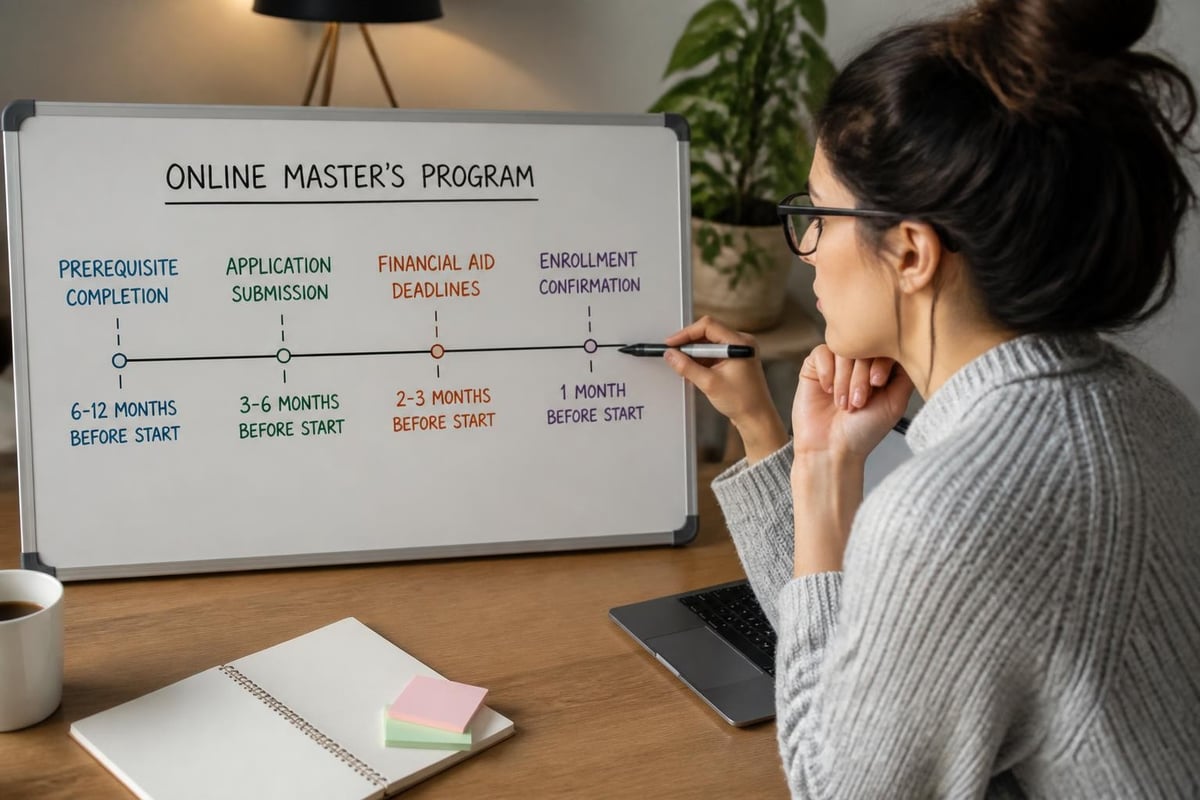
Prospective students should plan to submit applications 3-6 months before their intended start date. This timeline allows adequate processing time and ensures access to the most financial aid options.
Learning Experience and Student Support Services
The quality of online learning infrastructure and support services directly impacts student success in intensive accelerated programs.
Technology Platforms and Learning Management Systems
Modern online masters one year programs utilize sophisticated learning management systems that facilitate asynchronous and synchronous instruction. These platforms integrate video conferencing, discussion forums, assignment submission, and grade tracking.
Essential platform features include:
- Mobile accessibility for learning on-the-go
- Integrated video and multimedia content
- Collaborative tools for group projects
- Real-time interaction capabilities
- Offline content access options
The CHLOE 9 report provides insights into institutional best practices for online program quality, including technology infrastructure and instructional design standards that support student learning outcomes.
Faculty Engagement and Peer Interaction
Despite online delivery, successful programs create meaningful connections between students, faculty, and peers. Professors in quality programs maintain regular office hours via video conferencing and provide timely feedback on assignments.
Cohort models foster peer relationships that extend beyond program completion. Students progress through the curriculum together, building professional networks that support career advancement long after graduation.
Academic and Career Services
Comprehensive support services distinguish excellent online programs from mediocre offerings. Libraries, writing centers, career counseling, and technical support must be accessible to distance learners.
Students should verify that institutions provide online-specific resources rather than simply extending campus-based services. Virtual career fairs, online resume reviews, and remote alumni networking events demonstrate institutional commitment to distance learner success. The University Of Gold Coast maintains extensive online library resources and digital student services that support graduate students throughout their programs.
Balancing Work, Life, and Accelerated Study
Success in an online masters one year program requires strategic planning and sustainable practices that prevent burnout while maintaining academic excellence.
Time Management Frameworks
Effective time management separates successful accelerated students from those who struggle. The compressed format demands disciplined scheduling and consistent effort throughout the program duration.
Students should block dedicated study time on their calendars just as they would professional meetings. Creating a consistent weekly routine helps maintain momentum across intensive terms without extended breaks.
Employer Communication and Expectations
Transparent communication with supervisors about graduate study commitments helps secure necessary flexibility. Many employers provide schedule accommodations when employees pursue degrees aligned with organizational needs.
Strategies for employer support include:
- Discussing educational plans during performance reviews
- Proposing flexible work arrangements during peak academic periods
- Demonstrating how new skills benefit the organization
- Maintaining consistent work performance throughout the program
- Applying coursework concepts to workplace projects
Students who frame their education as professional development rather than personal interest often receive greater organizational support.
Self-Care and Sustainability Practices
The intensity of completing a master's degree in twelve months can lead to physical and mental exhaustion without proactive self-care. Students must prioritize adequate sleep, nutrition, and stress management throughout the program.
Building buffer time into schedules, maintaining social connections, and engaging in physical activity help sustain energy and focus across consecutive intensive terms. Recognition that completion is a sprint, not a marathon, helps students pace themselves appropriately.
Comparing Online Versus Campus-Based Accelerated Programs
Understanding the distinctions between online and residential one-year programs helps students select the format that best matches their learning preferences and life circumstances.
Learning Outcomes and Academic Rigor
Research consistently demonstrates that well-designed online programs produce learning outcomes equivalent to campus-based instruction. The key differentiator is program quality rather than delivery modality.
| Aspect | Online One-Year | Campus One-Year | Hybrid One-Year |
|---|---|---|---|
| Flexibility | Highest | Lowest | Moderate |
| Networking | Virtual/structured | Organic/continuous | Combined |
| Cost | Lower (no relocation) | Higher (housing/relocation) | Moderate |
| Employer compatibility | Excellent | Challenging | Good |
| Residency requirements | Minimal/none | Full-time | Periodic |
Both formats require full-time commitment and intensive study. The online masters one year option simply provides location independence and schedule flexibility that campus programs cannot match.
Networking and Professional Connections
Traditional programs emphasize spontaneous networking through daily campus interactions. Online programs structure networking opportunities through virtual events, industry speaker series, and alumni platforms.
Neither approach is inherently superior. The value of networking depends on program design, student engagement, and intentional relationship-building regardless of format. Introverted students may actually find structured online networking more comfortable than crowded campus events.
Credential Recognition and Career Impact
Employers increasingly recognize online master's degrees from accredited institutions as equivalent to campus credentials. The key consideration is institutional reputation and accreditation rather than delivery format.
Students should ensure their transcripts and diplomas do not distinguish between online and campus study, as many universities issue identical credentials regardless of modality. This parity ensures that an online masters one year degree carries the same professional weight as traditional formats.
Specialized Program Considerations by Field
Different disciplines present unique considerations for prospective students evaluating one-year online programs.
Professional Licensure Pathways
Fields requiring state licensure, including counseling, social work, and education, present additional complexity for online programs. Students must verify that their program meets licensing requirements in their practice state.
Supervised practicum and internship requirements may necessitate local placements that students arrange independently. Programs should provide placement support and maintain relationships with field supervisors across multiple geographic regions.
Research-Intensive Versus Professional Programs
Research-focused master's programs typically extend beyond one year to accommodate thesis requirements. Professional master's degrees emphasize applied skills and often substitute capstone projects or comprehensive examinations for original research.
Students with academic career aspirations should carefully evaluate whether accelerated professional programs provide adequate preparation for doctoral study. Research-intensive programs better prepare students for PhD work but rarely compress into single-year formats.
International Student Considerations
International students pursuing online degrees face unique visa and immigration considerations. Most online programs do not qualify for F-1 student visas since they lack the physical presence requirements immigration law demands.
However, international students residing in their home countries can complete entirely online programs without visa concerns. Hybrid programs requiring brief campus residencies present additional complexity regarding visa applications and travel logistics.
Making the Decision: Is an Online Masters One Year Program Right for You?
Determining whether to pursue accelerated graduate education requires honest self-assessment of academic readiness, professional goals, and personal circumstances.
Self-Assessment Framework
Prospective students should evaluate their preparedness across multiple dimensions before committing to intensive accelerated study.
Critical self-assessment questions include:
- Can I dedicate 20-30 hours weekly to coursework for twelve consecutive months?
- Do I have reliable family and employer support for intensive study?
- Are my undergraduate preparation and professional experience adequate for graduate-level work?
- Do I learn effectively in online environments with minimal face-to-face interaction?
- Is credential completion urgency worth the intensive demands of acceleration?
Honest answers to these questions reveal whether the online masters one year format aligns with individual circumstances and capabilities.
Alternative Pathways to Consider
Accelerated completion is not the optimal choice for every student. Part-time online programs extending 18-24 months offer more sustainable pacing while maintaining employment flexibility.
Traditional two-year formats provide deeper exploration of topics, more extensive networking opportunities, and greater course selection flexibility. Students without urgent completion needs may benefit from the less intense pacing.
Program Comparison Methodology
Systematic program comparison ensures students select the best option for their specific needs and goals. Developing evaluation criteria and weighting factors helps clarify priorities.
Students should request detailed information about curriculum structure, faculty credentials, student support services, accreditation status, and graduate outcomes. Speaking with current students and recent alumni provides insights that marketing materials cannot capture.
Accelerated graduate education through an online masters one year program offers tremendous value for motivated professionals ready to invest intensively in their advancement. The combination of flexibility, rigorous curriculum, and rapid completion creates opportunities for career transformation that traditional formats cannot match. Whether you're pursuing an MBA, MSc, or specialized master's degree, University Of Gold Coast provides comprehensive online programs designed for working professionals seeking advanced credentials without career interruption. With extensive digital resources, experienced faculty, and commitment to academic excellence, the institution supports your graduate education journey from application through graduation.